Showing posts with label Surrealism. Show all posts

Tuesday, 12 January 2016

'Horror'


CLICK TO ENLARGE

The Thing (1982)
There Will be Blood (2007)
Dragon ball Z (1989-1996)
Halloween (1978)
Game of Thrones (2011-)
The Babadook (2014)
Through a Glass Darkly (1963)
Boogie Nights (1997)
Return of the Living Dead (1985)
Stephen King's I.T (1990)
Carrie (1976)
Antichrist (2009)
Trainspotting (1996)
The Wicker Man (1973)
American Psycho (2000)
Saving Private Ryan (1998)
Attack on Titan (2013)
The Call of Cthulhu (1928)
Alien (1979)
Nosferatu (1922)
The Texas Chainsaw Massacre (1974)
When the Wind Blows (1986)

By Jack D. Phillips
A Zoom Film Collage

Wednesday, 8 April 2015

Masterpiece Corner: San Taam


Uneasy, confusing and utterly bewildering to behold.

San Taam (Mad Detective) caught my eye due to being included in the excellent Masters of Cinema Blu-Ray series distributed by EUREKA!. I went into the film almost entirely blind, as it seems to be seldom discussed within the online film community. What I discovered resonated with me instantaneously. A weird, blood soaked neo-noir totally befitting of the honor of being called a masterpiece. My second viewing only strengthened this view, and filled in the gaps that my first viewing left me with, and I am now convinced that this film should be considered one of the great neo-noirs of the last decade. (Spoilers from this point onward).

The film opens with a bang, setting the tone of the story perfectly in a brief prologue sequence. A detective, whose name is revealed to be Bun, explores several strange and extreme methods for solving a case, including attacking a pig carcass with a knife and throwing himself down several flights of stairs within a suitcase. This scene establishes both the skill and unhinged nature of  the main character, and concludes with the detective slicing off his own ear in the middle of his entire department. This brings the opening sequence back to reality, the audience now knows that this unhinged character is not to be taken lightly.This opening scene is the root of much of my love for this film, and I would use it as a prime example of how to start a character driven story properly. Before the story even begins a mystery is ignited, why did Bun slice of his own ear?  There is method to the man's madness in the first few instance of 'madness' we are shown, however the ear slicing scene takes things down a sharp different direction. What happened? Why did Bun lose the plot completely? These questions suck the viewer in and establishes a freakishly fascinating character in only a few minutes.

I am going to go on a brief interlude to praise this film's lighting. I do not even know how to really describe the lighting throughout most of the film. It has an ethereal and misty quality to it, particularly during the scenes with Bun's house and within a dimly lit restaurant. It is worth noting that both of these locations are highly significant to the main character, and so serve to  simulate his thought process. Misty, unclear and hard to identify, however still with a sharp and potent brightness behind the fog. I could go scene by scene and dissect the lighting in this film and I certainly consider it one of the most fascinating elements of the entire picture. 

Moving on from lighting, every actor in this film offers up a strong  performance, particularly Bun himself. Ching Wan Lau is fantastic in the main role, being highly likable and charismatic, drawing the audience into every crazy idea the character has, whilst still being animated and erratic enough to sell these crazy ideas as genuine.  Andy On is also very good as the film's second protagonist, Ho. The character acts as the perfect counterbalance to Bun, being far more stable and relatable to the audience whilst retaining an interesting character arc in his own right. On is able to keep up with Lau remarkably well, and sells the character as highly capable yet inexperienced and prone to worry. The interactions between these characters are well written and serves as the meat of the film's story very well.

What truly makes this film special though, is it's surrealist elements. The idea of setting a relatively simple noir storyline from the perspective of a mentally unstable character is inspired, and makes for a compelling spice to a fairly familiar recipe. Bun sees the inner personalities of every character in the film, as well as other things that other characters cannot, leading to some interesting visualisations of emotions and other aspects of each character. The main suspect of the case, and later the film's primary antagonist, has seven inner-personalities, which struggle for control over the body at several points in the film. 

These ideas are very visually interesting, and are sold beautifully. This is largely due to the film's high quality cinematography (particularly during the climax where everything is finally allowed to let loose), the films excellent use of sound to highlight specific objects within the story (usually guns) and the aforementioned brilliant lighting. The film is overall a technical masterpiece, with not a single element failing to sell the film's unique and deeply ambient atmosphere.

In conclusion, I find this film grossly underrated. It is one of the most adventurous and well put together crime thrillers made in the past decade, and I hope it's ideas and ambiance are taken up by other films in the future. I am fervently interested in the rest of Johnnie To's filmography, as I find his technique and ability to sell a fairly simple story captivating. San Taam's ending for example is simply exquisite for example, perfectly bringing everything built up throughout the film to a head in a simple gunfight and ending the story on an ambiguous and bittersweet note, which is highly open to interpretation. I would highly recommend this film to fans of noir and world cinema alike, it really is a hidden gem.

By Jack D. Phillips
Masterpiece Corner #4


Wednesday, 18 February 2015

Under the Skin (2014)

A shockingly daring
and haunting masterpiece.
Jonathan Glazer is one of
the current masters
of  British cinema.


In my continuing odyssey into the excellent films of 2014, I come across one of the most polarizing films of the entire year. Jonathan Glazer's intense and highly Kubrickian science fiction film, Under the Skin. So which end of the divided opinions do I fall on? Well by reading the title you'll discover that I adored it.

The aspect of the film which attracted so much attention upon it's release is of course the star, Scarlet Johanson. Much hype was placed upon her odd departure into arthouse cinema, and around her full-frontal nudity within the film itself (because we are apparently a society of pre-pubescent boys huddled around an old issue of Playboy).  Due to the nature of the film, it is fair to say that much of it's impact revolves around her performance and her ability to get across her character's subtle and introspective development. Despite the enormity of the task before her, Johanson does brilliantly, providing one of the more memorable performances in a year filled with excellent performances. The use of her sexuality, the subtle expressions of her eyes and posture and the spot-on sense of otherness within the character is all masterfully handled. It is films such as this and Lost in Translation that convince me that Johanson is an immense talent, despite appearing in crap such as Lucy. The other performances in the film are mostly delivered by amateur actors, and as such feature the typical qualities of well directed amateurs, naturalistic delivery, relatable and identifiable within their environment, and so on. It adds to the realism of the film and it was a stroke of genius to use so much hidden camera footage to capture authentic reactions.

Despite the hype surrounding Johansoon, it is visuals that truly dominate this film. These visuals in particular are some of the most haunting I have ever seen and I am sure they will stand alongside even the films of Kubrick as masterful examples of cerebral-visual storytelling. I am haunted by this film, in fact it most reminds me of Brad Anderson's film The Machinist. A similar cold and clinically precise type of aesthetic, a similar uncomfortable tone, paired with a similarly ambient soundtrack. Under the Sin takes all these elements to a new, possibly never before reached, extreme and does things Brad Anderson could only have dreamed of. In a number of ways, it truly does feel like the kind of film Kubrick would have made if he was just making his mark on the independent scene today. Under the Skin is one of the most visually powerful films I have ever seen, and is a triumph for digital cinematography on the whole.

The plot of Under the Skin is on the surface very simple. An alien begins luring men into a process which strips them of their essence in an attempt to create a number member of 'her' species. She eventually develops a hint of sympathy for one of the victims and attempts to connect with humanity. Eventually 'she' tragically fails to make this connection and the film ends on a somber note. The delivery of the classic and pathotic story is what makes it special however. There is very little dialogue, except for two unrelated exchanges in the film, and so it is all told largely visually. This allows great clarity and purity within it's storytelling, along with the potential for subtlety and ambiguity within it's symbolism and imagery. Overall I feel that the film delivered it's ideas wonderfully, and I eagerly await a second viewing to pick up on some of the smaller details throughout. 

In conclusion, watch this film. Decide for yourself whether you love it or hate it, but ensure you start off with the right mindset. This is not sci-fi/horror porn, despite what the internet believes.

By Jack D. Phillips
A Zoom Film Review 


Monday, 9 February 2015

Ohayo [Short Film] (2008)

A final encore from perhaps the most tragically 
short-lived auteurs of the last 50 years. Goodbye Kon.

Yet another review of a film less than five minutes long. I'm actually enjoying reviewing film in this brief format because they allow more abstract thinking around the film itself rather than simply covering the same points in every single review (something I aim to outgrow when I become a less mediocre writer).

Moving past that, Satoshi Kon.

A master. 

I know consider Tokyo Godfathers one of my all-time favourite films, and I simply cannot wait to see Perfect Blue and especially Paprika. So I consider myself a fairly big fan of the director, if a neophyte when it comes to his work. Ohayo is effectively a final goodbye from the man before his untimely passing. 

The film can essentially be viewed as a tiny microcosm for his entire filmmaking identity, or at least as I know it. Surrealist, based around a simple yet curiously unexplored subject, focused upon femininity and above all else, beautiful. Despite being so short, there is something achingly sweet about it. I got a similar vibe from Black Breakfast, so perhaps there is something inherently smile inducing about getting an entire cinematic experience in the time it takes to eat a sandwich, yet being left with a vision that'll stick with you for the rest of the day.

Watch Ohayo on Youtube for free. Do it to honor the final work of a great man and to enjoy a wonderfully supple slice of animated beauty.

By Jack D. Phillips
A Zoom Film Review

Sunday, 18 January 2015

The Top 25 Films about Insanity (MEGACUT)

So insanity........

Why is it such a popular subject matter for movies? Well I have 25 great reasons for you here. The ranking is largely arbitrary, however I stand by every choice here. I have some rules here however, with examples of films which were cut due to violating them:

- Only films which deal with insanity as a primary subject or theme, if it is only a minor or secondary element it was not considered for the list. (E.g, Stoker, Psycho)

- Disorientation or instability caused by drugs or some similar stimuli are generally not counted, as they often focus more on the stimuli than the mental state of the character. There are exceptions however, and any films on the list which are in this grey area will be explained as to why I allowed them and not others. (E.g, Insomnia, Trainspotting)

Films that are merely surreal or dreamlike. This was by far the biggest source of exemptions, due to my love of surrealism (E.g, Enter the Void, The Yellow Submarine, The Wall, Mary and Max)

- Paranoia or obsession, these are both key elements of insanity, however if the film solely focuses on these elements rather than something more complex or abstract, it doesn't count. (E.g, Vertigo, Oldboy)

Films about mental illness, isolation or other forms of mental distress. Not included as they do not involve actual loss of lucidity or control. Some films on this list kinda enter a grey area with this one too, however I will again explain why I included them over others. (E.g, Silver Linings Playbook, The Station Agent, The Wrestler)

Well anyway, I hope you enjoy this list. If there is a film which you wanted to see on this list but didn't make it, then it is likely I have not seen it yet. This list is by no means conclusive and if I find that it has become too outdated in the future, then I may remake it to better reflect my updated opinion. Please enjoy this list and leave feedback, I am sure that you will find at least one film here that you will love.

25. Battle Royale (2000)


If this list was merely ranked by the film's quality, then this would easily be in the top 5 (although I do love every other film on this list too). However it's portrayal of insanity is fairly minor when compared to others on this list, hence no. 25. This film shows insanity in a subtle way, however it creeps on you throughout the running time. The actions of the oppression society, and it's effect on the distraught youths is insane in itself, and it often results in the breaking of many of the minds on display here. This is only the first example on this list of a film which shows insanity through it's world rather than through a single character, and it is extra effective due to it's parallels to our own. A must watch film in my opinion, with a deranged and brutal edge. Also, if you want a more direct portrayal of insanity, Takeshi Kitano stars in this film and he is batshit crazy. Check it out!

24. Les Diabolique (1955)


This excellent French thriller is one of the greatest examples of acute paranoia I have ever seen. It was exempt from the rule I mentioned above due it portraying paranoia in a more atmospheric and complex sense, focusing on the mental strain it can bring as a result. Not much to say, other than this is a fantastic look at a mind slowly buckling under the weight of guilt, stress and paranoia, and it all ends with a fantastic twist worthy of Alfred Hitchcock (who ironically almost directed this film in thr first place).

23. Birdman (2014)


Another of the absolute best films on this list in my opinion, in terms of sheer quality (whatever the hell that means). However, it ranks lower on the list because the issue at hand is once again fairly minor in the grand scheme of the film at large. However it is still fairly integral to the central character, so I deem that it still counts. Anyway, Birdman shows how a character's obsessions can lead to a derailment of their sanity. We see how miserable and unstable people can be when following their dreams and how screwed the entire Hollywood and Broadway scenes can be. Keaton portrays a man who is only just able to hold things together, and the strain in his eyes remain in every one of his scenes. This film tackles the issue in a refreshingly fun way however, rarely becoming melancholic and instead allowing the audience to marvel at the craziness.


22. Manhunter (1986)


One of the most in-depth studies of a serial killer ever made, and one of the better portrayals of a heroic character driven to the edge of their sanity and restraint. William Peterson perfectly portrays a man who is not only haunted by the things he has seen, but is more importantly sadistically fascinated in these things. However it is how this disturbed and half-deranged main character mirrors Tom Noonan's wonderfully alien serial killer, which earns this film's spot on this list. A battle of wits, between two stages of criminal insanity. 

21. Vampire's Kiss


This movie is hilarious, however I hold that it is actually a pretty good film overall. I have written a vault review explaining why I feel that way, so check that out if you want. Anyway, Cage offers one of the most entertaining portrayals of insanity out there. However what makes this film powerful is the fact that Cage still manages to display the real pain and suffering of his character, along with giving a suitably psychotic performance. One of the best blends of entertainment and pathos on this list.

20. M (1931)


With all biases on the table, this is my favourite film on the entire list, and one of my favourite of all time. Ignoring that however, this film's portrayal of an uncontrollable compulsion to do evil is shockingly effective. Peter Lorre's performance here haunts me more than nearly any other performance in cinema history, and I simultaneously feel terror and sympathy for every moment he is on screen. Just a wonderful film, with a terrifying and psychotic edge. 


19. The Conversation (1973)


I nearly didn't include this film at all, as much like Le Diabolique this film covers paranoia over insanity on the whole. However, the ending is enough for me to include this, along with the subtly surreal and eerie dream sequence. This film is the equivalent of a delicious entree, it left me desperate to learn more about the the fascinating psych of Harry Caul and after watching I found myself attempting to dissect his mind without even noticing. Certainly one of the most interesting main characters I can recall seeing, and his ultimate descent into madness is harrowing to behold. 

18. Dr. Jekyll and Mr. Hyde (1931)


The well known story about the duality of man, lovingly brought to life on the screen. Fredrich March is outstanding and captures the essence of a man who's psych is falling into the abyss of his dark half. Not much to say, other than a wonderful portrayal of one of the most famous stories on this topic.

17. Shutter Island (2010)


A film which creates one of the more ambitious cinematic lies I have ever seen. The illusion that this film creates is impressive to behold, and in a rare turn Di Capreo is actually emotive enough to sell the twist of this film. I actually believed what I saw from him and was sucked into the twisted and sinister tone of this top-tier thriller. A great twist supported by a wonderful and foreboding atmosphere.


16. Nightcrawler (2014)


One of the newest films on this list, and more than worthy of being labeled as a classic. Nightcrawler examines a malevolent sociopath and how he interacts with society, or more importantly how society can allow a person with such a corrupt drive to succeed and benefit from our pathetic fixations. Lou Bloom is terrifying, not because he is insane, but because he reflects the insanity of our society at large, and the film is tailored to exploiting that horrific fact.

15. Network (1976)


Ironic to have this alongside Nightcrawler, considering how frequently the two were compared after Nightcrawler's release. However, it is a somewhat justified comparison. Both films revel in or society's depravity and our barely masked sadism over the suffering of others. Network is more direct than Nightcrawler however, and therefore tackles the issue with more complexity. The satire upon our society feels more like an argument than a statement, and therefore more can be taken from it. Insanity is also within the main character themselves, however in this case (much like Harry Caul) we feel sympathetic towards this protagonist and are intrigued to learn more about how their mind works. An acclaimed and bitter satire on our own insanity for a reason.

14. The Babadook (2014)


One of the best horror films in recent memory, and one of the most unnerving films I have ever seen. This is due to how it gets in the mind of it's main character and effortlessly allows you to understand the shaky psych of this character. One of the greatest character studies I have ever seen, and one of the most horrifyingly maddening on this list. By the film's end, I was begging for a reprieve from the claustrophobic nightmare and was haunted by the low-key ending. This film will disturb, and is on this list precisely for it's maddening effect upon the hapless viewer.


13. Bronson (2008)


This stylised and extremely entertaining film was the subject of a recent review of mine. However, above what I discussed in the post, it's main achievement is how it delves into the mind of such an unstable and violent individual. Once again, this film must receive major props for actually making such a character sympathetic, mostly through Hardy's highly likable, and not to mention outstanding, performance. This film is a ride through the life of a prisoner, and yet it feels more akin to a warrior's rise within a gladiatorial arena. This film is an odd one, however the way in which it shows psychology and insanity is truly spectacular.

12. The Silence of the Lambs (1991)


Perhaps the most obvious choice on this list, and a truly phenomenal film on top of that. Jodie Foster delivers one of my all time favourite heroic performances, however the film's highly intriguing take on insanity is why it is on this list. Anthony Hopkins is chilling as Lecter, we all now this, he treads a fine line between creepiness and humanity and is utterly captivating in every scene he inhabits. However, it is the cinematography and directing that earns this film it's place, not the acting. The theatrical nature of Lecter's escape scene, the intimacy of his meetings with Foster, the formalism of Foster's own scenes, and the terrifying claustrophobia of the Buffalo Bill scenes, all show a stunning blending of visual styles. Jonathen Demme represents the battle between good and evil, or sanity and insanity, by making his film a battle of visuals.
This film is often cited as a masterpiece of the thriller genre for a reason. It leaves me utterly terrified with it's climax, and it represents one of the purest trips into the mind of insanity that I have ever seen. A worthy number 12, which nearly made it even higher.

11. Primal Fear (1996)


I have no clue why this film is not talked about more. This film has one of the effective twists in recent thriller history, and in describing this film on this list I will sadly have to spoil that twist. In this ending, Edward Norton's character reveals that he has been lying about having a dual-personality, to the lawyer who has just saved him from being convicted of murder based on this false mental illness. This twist is brilliant due to the spectacular performance of Edward Norton, who throughout the film was convincing enough to allow as to believe that he truly had this schizophrenic condition, and his contemptible glee upon revealing his secret to Richard Gere's character, now that he is above prosecution.
Primal Fear discusses insanity from the outside, showing how society and primarily the law interacts with it. We see how easy it is for the system to be fooled and abused, along with ourselves the audience. There is also an extra detail in the ending which few seem to pick up on, Norton is still a psychopath. He was still a man capable of brutal murder and manipulation with remorse, even though his dual personality didn't exist. This detail gives commentary to how insanity is catagorised, and how easy a murderous monster can be confused with an innocent person with an unfortunate illness is really brought into question. I love this little gem of a film, and how rich and full of detail it's twist truly is.


10. Misery (1990)


This is another fairly predictable entry. Kathy Bates delivers one of the most terrifying performances I have ever seen in this Stephen King based thriller by Rob Reiner. James Caan represents sanity in a tense and thoroughly battle  of wits against an insane fan. The film investigates the vices of fame and the misfortunes faced when attempting to break out of a creative rut. Caan's issues begin when the character Annie Wilkes, played by Bates, discovers that he is ending his commercially successful series of novels in place of a more personal and bespoke book. This turns the film into an effective allegory for the battle within an artist between commercial success and artistic integrity. The fact that Wilkes represents the commercial desires speak volumes for the stance the film takes.
This film uses insanity to do many things and speaks to me quite profoundly. Bates is terrifying, representing so many of the ills which represent the mind of an artist and the trials they must face. It may seem to be one of the less subtle entries on this list at first, however I beg you to look at it a bit closer when you next view this classic of 90's thrillers.

9. The King of Comedy (1983)


Is this Scorsese's most underrated film? Probably (I still have a few of his films to see so I can't say for certain). In this hidden gem, Scorsese and De Niro offer one of their most poignant and effective  character studies, and one of the most poignant I think I have ever seen.Rupert Pupkin does not scare me, as so many insane characters on this list do. He worries me, because any person with aspirations can see themselves falling into a trap like this. Pupkin is among the most well portrayed and pathetic wrecks I have ever seen, and I see parts of myself in him. The creepy personal parallels aside, this film perfectly portrays the self-destructive nature of obsession without boundaries. Pupkin shows what happens when the American dream fails to deliver, and he is both amusing and harrowing to behold. I adore this film, and hope that all of you go to see what I consider to be De Niro's most immersive performance of all time. 

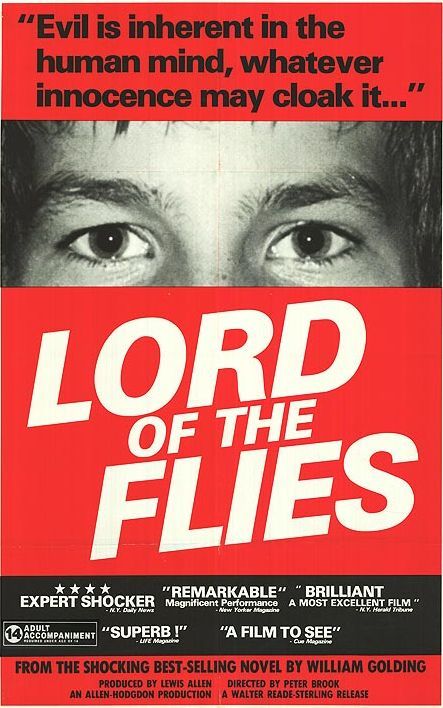
8. Lord of the Flies (1963)


I feel that this entry owes itself least to a description within the top ten. Most of what makes this film great can also be found within the novella of the same name. However, I would say that the reason I love this film is in how it so effectively brings the imagery of the book to life in cinematic way. It is not a simple dramtisation of the book, and if the book did not exist this would retain this place on the list all the same. This story remains one of the most effective observations on our innate brutality and animalistic insanity ever created, in either form. Personally, I prefer this film version as I find it better paced and more subtle than the novel (which I have read), however it is fair to say that either is worth a watch or read respectively. 


7. Bad Lieutenant (1992)


I recently released a review of this film which covered much of what I have to say about this film within this topic. Despite that, this film remains one of the most emotionally sapping and pathetic spectacles I have ever seen, and probably ever will see. Harvey Keitel gives one of the most empty and desperate performances, I can see the sanity leaking from his ears in every single scene. There isn't much to say here, other than the final Act of this film will leave you speechless.

6. A Clockwork Orange (1971)


Stanely Kubrick's masterpiece is one of the most complex and though provoking films ever made. It also stands alongside as a contender for being my favourite film on this entire list, regardless of the subject of this list. However, this film is not ranked this high for that reason alone. It is here for the terrifying and utterly insane society it portrays, and how it parallels our own. In many ways, it resembles Battle Royale,using a dystopian setting to show the depraved insanity of our own society and commenting on some of the darker paths we have already begun to walk down. However this film strikes a closer chord thanBattle Royale, drawing more believable parallels and showing a society that is not a-moral, only having a recognisable twisted set of ethics.
Alex himself is also a joyfully unsympathetic character, how is able to seduce the audience in a perverse way despite his own insane and monstrous behaviour. In that way, you could argue that A Clockwork Orange actually succeeds in dragging the viewer into a temporary state of insanity themsleves, forcing them to relate to characters who are seemingly unrelatable. Such is the genius of Kubrick.

5. Taxi Driver (1976)


Another Scorsese/De Niro team-up, this one perhaps being their most lauded collaboration ever. Travis Bickle represents isolation and the madness it can bring in the purest sense it has ever been shown. The film taps into so many causes, symptoms and effects of the alienation experienced by Bickle, and due to this shear detail, it would not be unreasonable to call this one of the all-time greatest character studies. Sadly, a little like Bad Lieutenant, since the main source of insanity, and the primary focus of the entire film, is the main character. Therefore, I do not feel like I can go into too much analysis and only recommend you see this film for yourself.


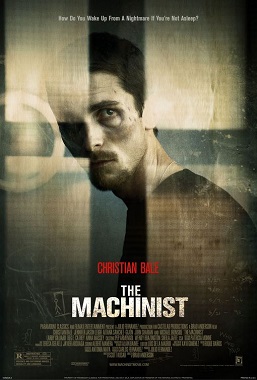
4. The Machinist (2004)


Christian Bale delivers possibly his greatest performance in this psychological masterpiece. Trevor Reznek is one of the most complex and stunning characters on this entire list, and his struggle through paranoia and eventually insanity is hard to watch at times. This film manages to provide two seemingly contradictory perspectives at the same time, the perspective within Reznek's head, and the perspective from the outside of his mind. It is hard to determine how the film allows us to feel both intertwined with Reznek and separate from his plight at the same time, allowing the audience to both figure out and decipher the mysteries of the narrative at their own pace, similar to a Hitchcock film, and to feel as though they are trapped in this situation with him, more akin to Scorsese's character studies. This balancing of tones and perspectives is what gets this film so high on the list, it is one of the most complex and thorough character studies I have ever seen.
The film is also beautifully shot and told outstandingly, and is by all accounts a masterpiece. Bale and director Brad Anderson worked together to create one of the finest psychological thrillers of the century thus far, and I implore you all to watch the twisted delve into the mind of a fascinating individual.

3. Pi (1998)

Pi

This film is insane. It embodies the idea of insanity and a loss of control more than any other film on this list, bar the #1 film. This surreal, uncomfortable and roughspun film launched the career of Daren Aronofsky, one of the most daring filmmakers in current American cinema. It chronicles a man going gradually insane....and that is about all that concretely happens within this film. Everything else is up to interpretation and is totally deranged. Pi is one of the most abrasive film's I have ever seen, and much like how Aronofsky's Requiem for a Dream, Pi aims to force the audience into feeling the same emotions as the onscreen characters. Therefore, whilst Requiem aims to depress the audience, Pi literally aims to drive it's viewers insane. There is only one other film on this list which aims to do that one thing, and we will get to that soon.

2. American Psycho (2000)


This film is too obvious to write about, if you've seen this film then you've been waiting for it to appear. If you haven't, then it's placing should speak for itself. It is brilliant, and totally unhinged. The only other thing I can recommend is the original novel, which offers a very different perspective and is even less coherent than the film.

1. Apocalypse Now (1979)


Apocalypse Now is an insane movie, about insanity, made by people who had been driven to insanity at the time, and was likely woven with insanity at every level of it's production. The seemingly simple story of a disillusioned army officer sent out to assassinate a rebellious Colonel is renown as one of the most daring, provocative and shocking films ever made. Battered by possibly the worst production of all time, budget constraints, Marlon Brando acting like a total jackass on set, Martin Sheen suffering from alcoholism and a heart attack, Francis Ford Coppola threatening suicide, issues with the Philippian army (the country wherein the film was shot), a huge storm which crippled production, the principle shoot dragging out for almost 18 months, a group of extras who murdered a buffalo on camera (a shot which features in the final cut), conflicts over the editing process, and much more.
No wonder then, that a film born of such insanity and hardship is the greatest study of the latent animalistic insanity which lies within us all. A film which shows not only the futility of war, but the madness that results and births it. Is Colonel Kurtz insane, or is he the only sane man in the country? Will his death calm things or result in even more rampant madness? What kind of society would allow a monster such as Killgore to be given such a high rank? Apocalypse Now does not answer any of these questions, it overloads the audience with so many unanswered question in fact that it is likely to drive the viewer into a maddening state of self-conflict.
I love Apocalypse Now, it is one of the many astonishing films on the list and I urge you all to experience it at least once. In my opinion it is the ultimate statement on insanity, and one of the most unnerving experiences I have ever had.


By Jack D. Phillips
A Zoom Film List