Showing posts with label Sex. Show all posts

Sunday, 6 December 2015

My Favourite Films (Part 6)

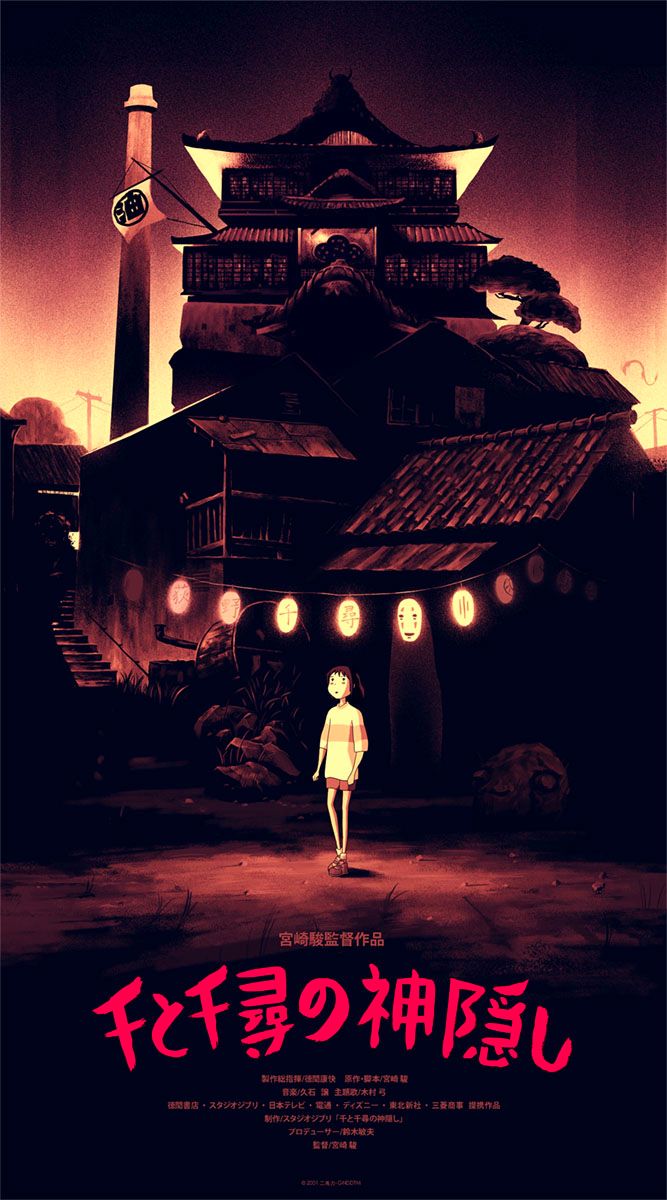
Spirited Away (2001, Hayao Miyazaki)

Much like Martin Scorsese, Miyazaki is a beyond legendary director who's filmography I obsessively consumed in a fairly short span of time. Also like Scorsese, it has been a fairly long time since this phase of obsession so I feel uncomfortable putting many of his films on this list despite my love for them.

Spirited Away is different however, my history with this film goes back further than probably any other film, having watched it around half-a-dozen times since I first watched it as a child. 

I love everything about this film, to the point to where it has become more a part of me than anything else. I see this film everywhere, I can't even describe how differently I would have developed as a person if not for this film.

Nothing more to say about this majestic film, other than you should watch it.

Tokyo Godfathers (2003, Satoshi Kon)


A fast, wild and totally engrossing comedic-adventure. A masterpiece of an animated film which manages to combine the amusing antics of a film like Blues Brothers with deep and touching character and heart.

I adore films that are able to turn their settings into breathing characters, and this film is one of the strongest examples of this that I can think of.

A beautifully told story, topped off with one of the best climaxes in any animated film.

Eternal Sunshine of the Spotless Mind
(2004, Michel Gondry)
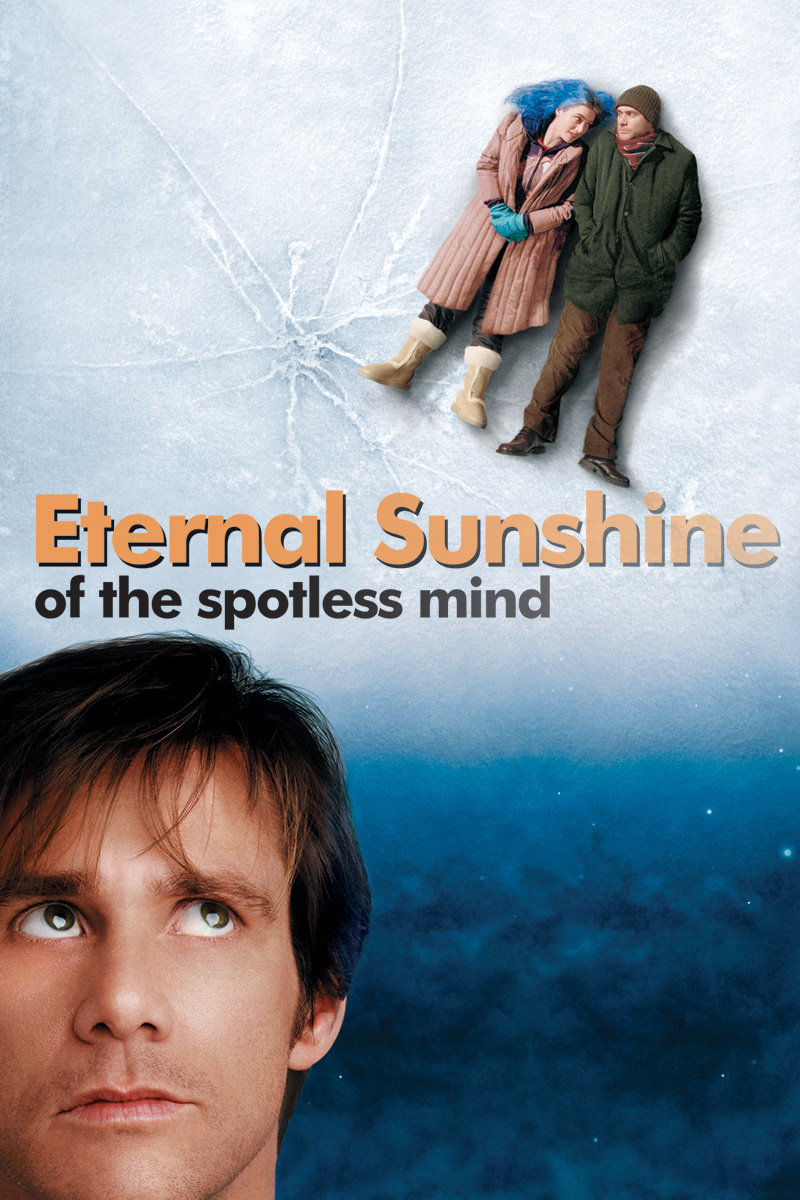
This film is hard to talk about. It has more power over than any other film I can think about, with simple images and sounds from the film being able to reduce me to putty.

If Rashomon isn't my favourite film then it has to be this one, I simply adore everything about it. From Charlie Kaufman's utterly perfect script, to the stunning and heart wrenching script, to the amazing performances from the entire cast. Everything in this film works. Even the soundtrack, quite possibly my favourite soundtrack of all time, can reduce me to a whimpering fool if I  am exposed to it for too long.

To sum up my feelings for this film, I was once so enraptured by it that I watched it twice, back-to-back, in one night.


Enter the Void (2010, Gasper Noe)
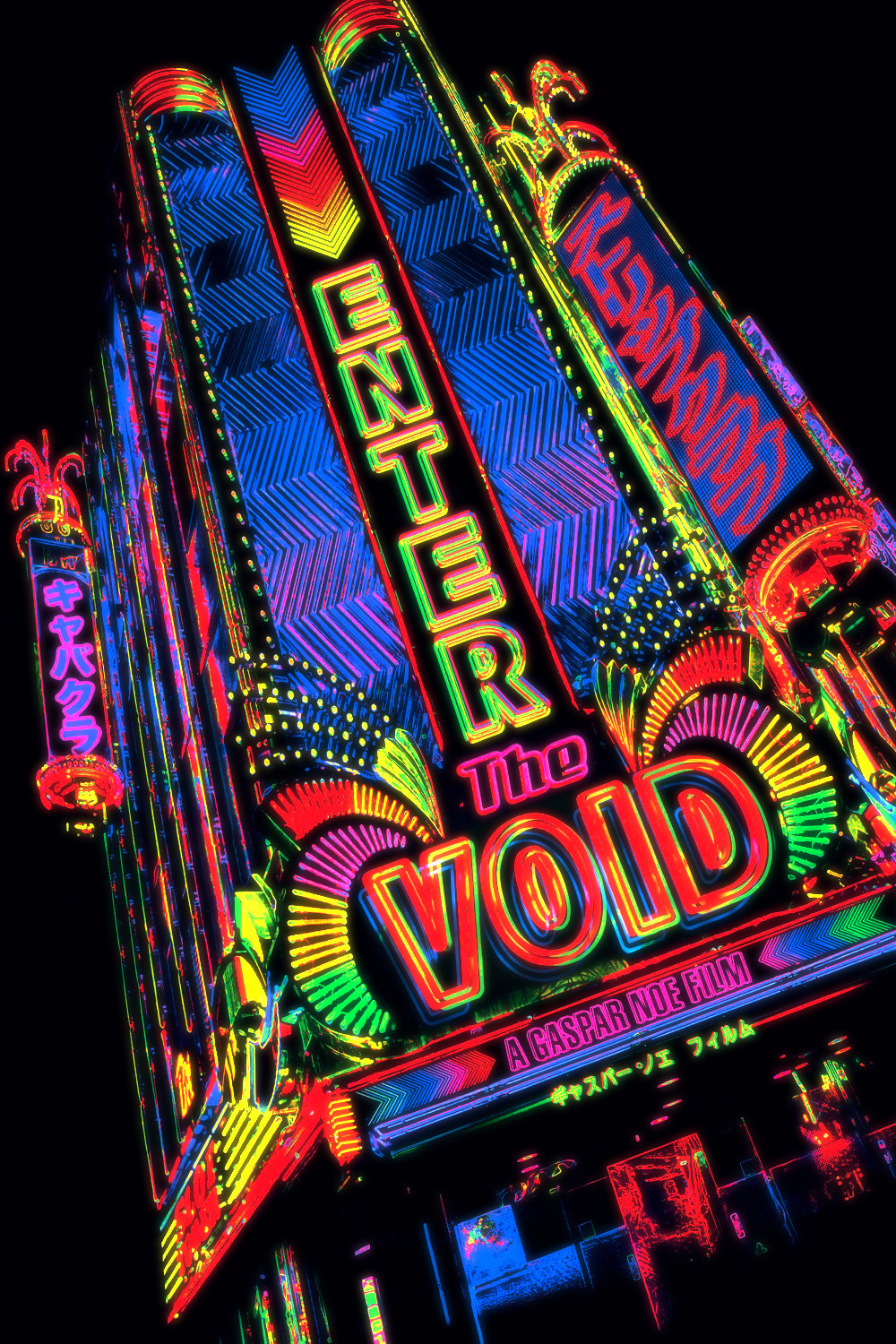

This film kind of scares me a little. It is a voyage into a a dark, dirty and blurry world which does not hold back in any way.

One of the most ambitious and gloriously pretentious projects in the history of cinema, yet despite it's pretensions it is able to tap into something very human and touching.

A true technical triumph in both the craft of film, and the art of cinema.


It's Such a Beautiful Day (2012, Don Hertzfelt)

Don Hertzfelt is easily my favourite film maker working today. I can't do his work anywhere near justice in words so I can only beg you to watch some of his short films, easily available on Youtube. Seriously, get out of here, go now.

If you want to hear what I think about his (currently) only feature film, here it is. It is basically the antithesis of Enter the Void. Not pretentious or technically extravagant in any way, the main character is a damn stick-figure for christ's sake! However the film still manages to be one of the most touching things I have ever seen, and Hertzfelt does things that I have never seen before in my life with some basic B/W photography and some line drawings. In fact, this is another film that manages to contest Rashomon as my favourite feature film of all time.

I am utterly obsessed with Hertzfelt, and if there is a single artist on this list that I recommend you check out it has to be this one.

By Jack D. Phillips

Thursday, 3 December 2015

Perfect Blue (1997)


 photo PerfectBluePoster.jpgSurreal and yet totally grounded in human emotion, Satoshi Kon's first feature holds up incredibly well. Although it suffer from a weak ending.


What better film to start off the holiday season than a dark psychological thriller with not one, not two, but three scenes of sexual assault? 

Satoshi Kon is a genius, and one that I have talked about several times on this blog. Around one year ago I made my first foray into his work and was floored by his incredible film Tokyo Godfathers, which I would since consider one of my favourite animated films of all time. Since then I have become far more knowledgeable in terms of animation and wished to revisit his small but remarkable filmography.

Perfect Blue is a psychological thriller, and by that I mean truly psychological. It is both a thrilling mystery, and more importantly a dark journey into the sub-conscience of a very interesting leading character.

Mima is a pop idol, a recognisable but largely disposable pop figure in Japanese culture. The kind to amass a large and rabid following, without much in the way of substance or future prospects. She decides to leave the group she was a part of to strike out in acting, a decision she makes to further her seemingly limited career prospects, and she experiences a swirling descent into madness and abuse.

The film's perspective is largely situated in Mima's mental state, with benign yet significant aspects of her life (her fish, her new computer) coming to represent the disastrous changes that occur in  her life. Unlike say, the thrillers of David Fincher, who invites the audience to view the drama unfold from an outsider perspective, Kon gives us front row seats. We are inside Mimas head, experiencing her paranoia and increasing separation from reality along with her.

This brilliant perspective comes to crescendo during an extended montage sequence wherein Mima repeatedly skips moments in her life, waking up in various location with no idea how she got there. At this point, the film becomes truly disorienting, with reality becoming difficult to perceive or understand. Furthermore, Mima slowly give sup trying to understand her world, submitting to her lack of attachment to her own life.

This deeply unsettling mental breakdown comes as a result of the various humiliations and abuses she undergoes in her new career as an actress. Her initial part in the tv show she signs onto is tiny, however by agreeing to participate in a rape scene (to boost ratings) her part is increased. I wonder how many dozens of budding actresses have been forced into the same decision, it is a disgusting thought. The pain of moments like this is so sharp, easily some of the best and most unsettling use of character decisions I have ever seen in a film.

The film is also gorgeous to look at. Anybody who accuses animation of being a lesser form of film can officially go fuck themselves, Kon has one of the most precise and inventive cinematic eyes I have ever seen and some of the simple images in this film took my breath away. In terms of editing, the opening performance from Mima and her musical group is one of the most engaging and well put together opening sequences I have ever seen and the aforementioned psychological montage never lost my interest.

Before I finish up I may as well give a comment on this film's relationship to Black Swan. Director Darren Aronofsky is a gigantic fan of Kon's work and took a lot of inspiration from Perfect Blue not just in that film, but also in certain images from Requiem for a Dream. Some have even labelled Black Swan a pseudo remake of Perfect Blue, and I have to disagree in this area.  The two films share a lot in common, however popular opipion and that nature of obsessiveness in fans is a key theme in Kon's film that Aronofky's lacks. The two films also have radically different styles of editing and totally different settings, important as the cramped Tokyo apartment Mima occupies in this film is as much a reflection of her mental state as the editing is (her room becomes more and more messy and unkempt as she begins to unravel). So although the two films are certainly kindred spirits, calling one a remake of the other does them both a severe disservice.

Finally, the films ending. My one big grip with the film. The film ends far too cleanly, the person who has been stalking and threatening Mima is caught, her acting career has taken off, and Mima has regained control over her identity and her life overall. I do not like this. For such a jagged and bold film this ending feels to clean, like ending Apocalypse Now with 'and then the war ended and everyone got back to their normal lives happily'. No, the damage dealt to Mima in this film was too crushing and harsh to be so easily swept away, the film almost seems to believe that catching the stalker was all Mima needed tp get things together. Absolving to television studio that figuratively raped her of any guilt, along with Japanese society on the whole.

This ending really bugs me and prevents me from loving the film as much as I truly want to. This film could have been one of my storytelling Bibles, and I suppose it still is, but I cannot call it a true masterpiece. 

What a damn shame.

By Jack D. Phillips
A Zoom Film Review

Tuesday, 28 April 2015

Inside Number 9: Episode 11: Nana's Party

An 
uncomfortable
and deeply moving
episode. An 
emotional
high point for the series.


This is episode of the show is not for the faint hearted. Nana's Party is the ultimate culmination of he efforts made by episodes such as The 12 Days of Christine and Last Gasp, to create a fully satisfying and complex family drama in only thirty minutes. I honestly cannot say that I have ever seen such a potent and complex range of emotions in such a short space of time, this episode is simply triumphant over it's restrictive format.

The primary reason for this episodes success is the wealth of excellent performances on display here. Aside from our familiar duo, who are both equally phenomenal here and provide some of the most powerful moments of the entire show, Claire Skinner is our standout talent for this episode. The actress' greatest talent is without a doubt her relatablity, which makes watching such horrible scenarios happen around her quite uncomfortable from the beginning. It is worth noting that this is the second episode of the show to be directed by Pemberton and Shearsmith, and I am only growing to love them for the quality of performance they are able to get from their actors. Not a single line falls flat here, and I cared deeply for every single one of the main cast.

Before I ramble for too long about the acting, I must deliver some kind of praise at the script for this episode. If it isn't the strongest script of the entire series then it is certainly close, and I believe this episode sands as a primary testament to the duo's immense collective writing ability. The script here is absolutely wonderful in it's plotting, without a doubt the strongest of the series thus far and it is filled with a host of stunningly funny and heart-achingly potent moments. This episode's climax is a true marvel, perfectly built up and incorporating every character and plot point of the episode up to that point in one incredibly powerful (and surprisingly hilarious) conclusion.

Overall, this episode is a masterwork and stands a one of the show's newest highpoints. Although season two of the show is certainly less consistent than the first, I can say that it has certainly offered up some incredible television.

By Jack D. Phillips
A Zoom Film Review
Inside Number 9: Episode 11

Wednesday, 18 February 2015

Under the Skin (2014)

A shockingly daring
and haunting masterpiece.
Jonathan Glazer is one of
the current masters
of  British cinema.


In my continuing odyssey into the excellent films of 2014, I come across one of the most polarizing films of the entire year. Jonathan Glazer's intense and highly Kubrickian science fiction film, Under the Skin. So which end of the divided opinions do I fall on? Well by reading the title you'll discover that I adored it.

The aspect of the film which attracted so much attention upon it's release is of course the star, Scarlet Johanson. Much hype was placed upon her odd departure into arthouse cinema, and around her full-frontal nudity within the film itself (because we are apparently a society of pre-pubescent boys huddled around an old issue of Playboy).  Due to the nature of the film, it is fair to say that much of it's impact revolves around her performance and her ability to get across her character's subtle and introspective development. Despite the enormity of the task before her, Johanson does brilliantly, providing one of the more memorable performances in a year filled with excellent performances. The use of her sexuality, the subtle expressions of her eyes and posture and the spot-on sense of otherness within the character is all masterfully handled. It is films such as this and Lost in Translation that convince me that Johanson is an immense talent, despite appearing in crap such as Lucy. The other performances in the film are mostly delivered by amateur actors, and as such feature the typical qualities of well directed amateurs, naturalistic delivery, relatable and identifiable within their environment, and so on. It adds to the realism of the film and it was a stroke of genius to use so much hidden camera footage to capture authentic reactions.

Despite the hype surrounding Johansoon, it is visuals that truly dominate this film. These visuals in particular are some of the most haunting I have ever seen and I am sure they will stand alongside even the films of Kubrick as masterful examples of cerebral-visual storytelling. I am haunted by this film, in fact it most reminds me of Brad Anderson's film The Machinist. A similar cold and clinically precise type of aesthetic, a similar uncomfortable tone, paired with a similarly ambient soundtrack. Under the Sin takes all these elements to a new, possibly never before reached, extreme and does things Brad Anderson could only have dreamed of. In a number of ways, it truly does feel like the kind of film Kubrick would have made if he was just making his mark on the independent scene today. Under the Skin is one of the most visually powerful films I have ever seen, and is a triumph for digital cinematography on the whole.

The plot of Under the Skin is on the surface very simple. An alien begins luring men into a process which strips them of their essence in an attempt to create a number member of 'her' species. She eventually develops a hint of sympathy for one of the victims and attempts to connect with humanity. Eventually 'she' tragically fails to make this connection and the film ends on a somber note. The delivery of the classic and pathotic story is what makes it special however. There is very little dialogue, except for two unrelated exchanges in the film, and so it is all told largely visually. This allows great clarity and purity within it's storytelling, along with the potential for subtlety and ambiguity within it's symbolism and imagery. Overall I feel that the film delivered it's ideas wonderfully, and I eagerly await a second viewing to pick up on some of the smaller details throughout. 

In conclusion, watch this film. Decide for yourself whether you love it or hate it, but ensure you start off with the right mindset. This is not sci-fi/horror porn, despite what the internet believes.

By Jack D. Phillips
A Zoom Film Review 


Thursday, 8 January 2015

Shame (2011)

Although frustratingly unfocused
 and flawed in places,
 this film is a testament
 to the talents
 of it's director
 and leading actor.


Shame deserves acclaim, if simply because this came from such an inexperienced director (only his second film) and still turned out so meticulously made. This film is shot beautifully and shows outstanding talent from the future best picture winning director. It also features some of the most daring and impressive long takes I have ever seen. However, I do have some fairly harsh grievances with the film's subject matter, and more importantly how that subject matter is portrayed.

The film portrays the deep emotional and psychological issues brought on by serious sex addiction, and the loneliness that it can bring about is perfectly mirrored by the sparse and cold cinematography. However there are some questionable moments which in my opinion, work towards weakening the film's tone. For instance, a seemingly superfluous shot showing Fassbender's character snorting a line of cocaine, during a scene wherein he has supposedly cleaned up his act, is baffling to me. Not only does it carelessly gloss over drug abuse as an issue not worth exploring, as it is never brought up again, but it also ruins the idea that the character is genuinely trying to fix his vice ruined life. I have no clue why this pointless shot was included and it helped to contribute to the film's lack of focus. In addition (SPOILERS), a scene in which Carrey Mulligan's character attempts suicide is similarly lacking in depth. The issue of self-harm or suicide are not explored prior in the film, and it does not seem to tie into the primary issue of sex addiction in any substantial way. Overall issues such as these really spoiled the film's tone for me, and put the quality of the editing into question for me.

However, the film is filled with great qualities that these flaws do not ruin for me. Fassbender is outstanding, showing amazing expression in his face and throwing himself 100% into every single scene. He is great, and with the excellent of support of Mulligan, the film's primary cast truly impressed me. The rest of the actor's, all in relatively small roles, also do very well and overall I would call this film a testament to McQueen's ability to direct his performers beautifully. Also, as I mentioned before the cinematography is jaw-dropping and the film's pace is appropriately methodical. The score is of good quality too, if a touch repetitive for my taste.

In conclusion, I was impressed by Shame and I would recommend it. However it's flaws are deep and there are more I decided not to discuss here, mainly because they stray too far into personal preference for a review of this format. Suffice to say however that they are cut from the same flawed cloth as the other issues that I have discussed in this review. Shame shows outstanding promise, however it has too many issues to truly endorse this one.

By Jack D. Phillips
A Zoom Film Review


Tuesday, 6 January 2015

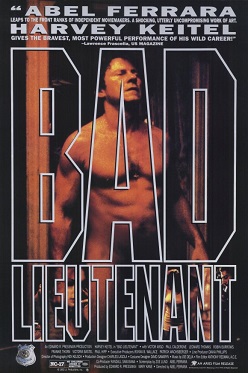
Bad Lieutenant (1992)

A journey into cinematic Hell, 
Keitel will make your jaw drop
 with one of the most dedicated 
performances of all time.


Harvey Keitel is a phenomenal actor, few doubt that. He has delivered several wonderful performances between now and the late 60's, however I almost guarantee that you will be shocked by Bad Lieutenant. Keitel delivers a earth-shattering performance that will leave you feeling hollow and emotionally destroyed. I could honestly end my review right there, this film deserves to be seen for this performance alone, even without the films many other notable achievements and successful elements. 

Among those other successful elements includes the fantastic cinematography. It looks rough, gritty and old fashioned, like a 70's exploitation thriller which managed to survive the years through drugs and dumb luck. Much like Keitel's character. It reminded me a lot of Mean Streets, and it is brimming with rough charm and personality. This is a film with a very specific tone and feel, and the cinematography perfectly compliments this tone and creates an indescribable atmosphere. Almost any still from this film could be used in an anti-drug poster campaign or something, the film is that effectively shot.

The film's screenplay is fantastic, a simply but shockingly poignant tale of redemption and degeneration. Keitel's is given all the time he needs to develop his disgusting character, whilst also planting brief moments of sympathy and hope here and there. The subplot about the nun's rape is given enough time to get it's complex and unique ideas across, however it never feels even remotely superfluous and ties into the film's main themes beautifully.

In conclusion, there is little I can say about this film. It is such an effective and emotion rending experience that I don not want to spoil anymore than I have to. Watch it for yourself and witness one of the greatest performances I have ever seen, wrapped in one of the most disguising characters I have ever witnessed.  

By Jack D. Phillips
A Zoom Film Review

Thursday, 18 December 2014

The Ice Storm (1997)

Despite some nice visuals
 and clever storytelling,
Ang Lee's 
multi-stranded drama
 is flawed and hardly a masterpiece


The Ice Storm was Gene Siskel's favourite film of 1997. It has also received a Criterion release and is generally lauded as an obscure gem. I must say however, that despite some effective elements and ideas, I do not believe that this film is worthy of such high praise. Here's why:

The film's acting is perhaps it's greatest asset overall. Sigourney Weaver and Kevin Kline are both great in particular, along with the cast of younger actors. Due to the film's multi-stranded nature, each of the 'main cast' receive comparable amounts of screen time throughout the film and are all allowed time to shine and give something memorable. This perhaps the greatest strength of such a structure, allowing the actors roughly equal time to establish themselves and give their performances.

However, it is the screenplay that lets the cast down. The dialogue is relatively good, natural enough and often poignant, however is hardly the stuff of greatness. The characters and narrative are the main issues here however. The audience is expected to sympathies with the sexual and romantic frustrations of rich white people, and although this can be done well in some other films, here it screams the phrase 'first-world problems'. There is nothing forcing Kevin Kline's character to attend a wife-swapping party, at all, however we are made to feel sorry for him regardless. This is the most egregious example of the problem, however not the only. The film is also narrated by Toby Maguire, who does a decent job with his material as a pathetic and slightly creepy nerd. However his subplot is entirely superfluous and does not intertwine with any of the others, ruining the entire idea of 
multi-stranded storytelling. This gets me onto the largest issue I have with the narrative, things that we are told are important, do not seem to be. Maguire's nothing subplot takes more screentime than one involving the death of a curious adolescent boy. This is an example of the screenplays weakness, not properly explaining what it is trying to say, burying it's poignant moments beneath irrelevant ones. I will say that a subplot involving the sexual awakening of a young girl and boy was fairly spot-on. Well acted, paced and given the gravitas necessary. It is also the only one which seems to culminate in some fashion and have a semblance of a conclusion.

Despite the weak screenplay, the film is nicely shot. It captures the essence of the hostile cold environment, the 1970's period, and the small-town American setting quite well. There are also some very clever and truly memorable images here, although hardly enough to redeem some weaknesses in the screenplay. This is not a Terrence Malick film, reliant on aesthetics rather than screenplay in order to get it's ideas across, it is simply a well-shot film with an uneven screenplay.

In conclusion, I think this film would have worked better as a TV miniseries. The structure and prevalence of subplots would have probably worked out better in that format, and the acting and dialogue (whilst mostly good) do feel more akin to a TV show than a cinematic release. Overall I do not understand the abundant praise and feel that the film is a flawed and uneven mess, with some very notable high-points.

By Jack D. Phillips
A Zoom Film Review.

Sunday, 14 December 2014

Enter the Void (2010)

25 FPS of beautiful and acid filled wonder.
Perhaps one of the most daring films 
I have ever seen.


Hot of the heels of my top 40 unseen directors list, I have finally begun to work myself through said list. I decided to begin with 'Enter the Void', and I am still scoping my brain and eyes from the floor. Gasper Noe's magnum opus, fifteen years in conception,  is a visual masterpiece. Probably the best onscreen depiction of death, acid, and sexuality all at once.

I most give a warning before I continue however, this film is a risk to all people with epilepsy out there, it may seriously kill you. These seizure inducing, yet stunning visuals are the most striking element of the film, however they are not the only aspect of the film which deserve high praise. The film is also a storytelling triumph, creating a huge cast of likable and interesting characters. Even more impressive is the world the film portrays, Tokyo is alive, more of a character than anyone onscreen. In crafting these relatable and complex story elements, the film proves to be more than simply a visual spectacle. The largely improvised dialogue is very naturalistic, and the actors really etch out some very defined performances.  Particularly Paz de la Huerta, in the films most prominent acting role. I have high hopes for her in future projects.

Regardless, it the visuals are indeed king here. This film has a shot, which I'm sure lasted for sixteen minutes. That is insane, absolutely nuts. Perhaps there was a hidden cut or two in there, but I couldn't spot them, and I was searching for one. This absurd cinematography, along with the perfect color palette, makes this perhaps one of the most beautiful films of the decade thus far. It is a drugged up and psychedelic labyrinth of neon and shadow. It really has to be seen to be understood. Truly stunning.

The films themes of family, sexuality and death are all beautifully presented through visual means. Noe claims the film was inspired by a viewing of 2001: A Space Odyssey he witnessed while on drugs, and that is the perfect way to describe the film. It is Kubrick on acid,  2001 through the lens of a dying junkie. Its theming, visuals and story all scream Kubrick, but the scream is used to tell the story of a dead drug dealer in Tokyo. It is one of the most fully formed concepts I have seen in a recent film.

This film is 25 FPS (rather than the more common 24, Noe wanted to further alienate the audience) of perfection. An international celebration of all things insane in filmmaking.

By Jack D. Phillips
A Zoom Film Review.