Showing posts with label Horror. Show all posts
Tuesday, 12 January 2016
'Horror'
CLICK TO ENLARGE
The Thing (1982)
There Will be Blood (2007)
Dragon ball Z (1989-1996)
Halloween (1978)
Game of Thrones (2011-)
The Babadook (2014)
Through a Glass Darkly (1963)
Boogie Nights (1997)
Return of the Living Dead (1985)
Stephen King's I.T (1990)
Carrie (1976)
Antichrist (2009)
Trainspotting (1996)
The Wicker Man (1973)
American Psycho (2000)
Saving Private Ryan (1998)
Attack on Titan (2013)
The Call of Cthulhu (1928)
Alien (1979)
Nosferatu (1922)
The Texas Chainsaw Massacre (1974)
When the Wind Blows (1986)
By Jack D. Phillips
A Zoom Film Collage
Monday, 14 December 2015
My Favourite Films (Honourable Mentions)
To finish off my anniversary look at my favourite films, here are five honourable mentions. The first two films on this list are films that I watched while uploading the list itself, and would have definitely been up for consideration if I had gotten to them sooner. The other films are ones that almost made it on, but I decided against it for one reason or another.
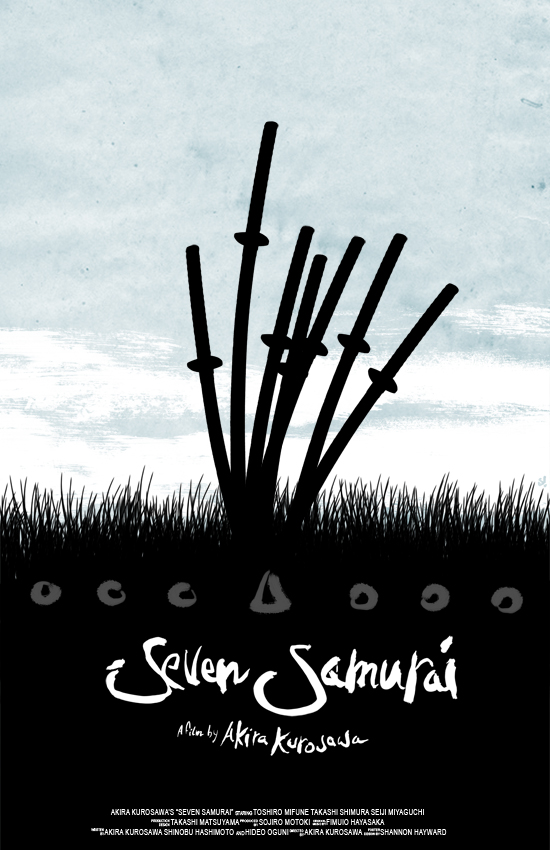
Seven Samurai (1954, Akira Kurosawa)
This film is every bit as good as everybody says it is. One of the most remarkable examples of how to develop a large number of characters and frame them against some of the most engaging action ever put to celluloid.
Truly some of the best cinematography and some of the best performances you will see in Japanese film. Just a shame that I waited until midway through making this list to rewatch this masterpiece. I could watch this film literally a hundred times and still find it fresh and new, it's alive.
Stop Making Sense (1984, Jonathan Demme)
One of the most surprising films I have ever seen. It is hard to imagine that a simple concert film (literally, there is nothing to the film other than just a concert) could be this good. The Talking Heads' music, the editing and the overall pace are all exquisite.
I honestly am floored by this one, a week after watching it and I can't stop listening to it (I am listening to Once in a Lifetime as I write this sentence) and it keeps drawing my attention from other things. Just, incredible in every single way.
Through a Glass Darkly (1961, Ingmar Bergman)

I excluded this film purely because next to the complex majesty of Persona this far simpler Bergman film cannot help but look a little modest and unremarkable.
Still, Harriet Anderson gives one of the greatest performances I have ever seen in this film and the entire cast does incredible work. Bergman offers an intelligent and emotionally charged portrait of a crumbling family and doesn't hold back in a single scene. Just an incredible drama.
The Innocents (1961, Jack Clayton)
This is film that I think I reject not putting on the list the most. I have no real reason for the exclusion and although I cannot think of any film in particular that I would have cycled out for this one, it does play heavily on my mind.
Anyway, this is probably the most unnerving and unsettling horror film I have ever seen, and one of the most amazingly edited films period. It is a feature length session of build-up that finally results in one of the most crushing notes of any film I have ever seen.
This is the kind of film I feel you could spend many a year pouring over and deconstructing, finding new and horrifying things the entire time.
The Thing (1982, John Carpenter)

A film that I have watched many a time and have left with something new on each viewing. Horror, joy, fascination, it is a film that has given me much. Carpenter was truly an incredible director in his prime, and is one of the most diverse filmmakers in history.
With this film Carpenter achieved something greater than almost every other film on the planet has, impact. True impact, the kind that sends ripples and affects things that one would not expect. I assure you that every other film featuring a parasite or an desolate environment owes this film a true debt. A film that has influenced me very heavily indeed.
By Jack D. Phillips
Seven Samurai (1954, Akira Kurosawa)
Truly some of the best cinematography and some of the best performances you will see in Japanese film. Just a shame that I waited until midway through making this list to rewatch this masterpiece. I could watch this film literally a hundred times and still find it fresh and new, it's alive.
Stop Making Sense (1984, Jonathan Demme)
I honestly am floored by this one, a week after watching it and I can't stop listening to it (I am listening to Once in a Lifetime as I write this sentence) and it keeps drawing my attention from other things. Just, incredible in every single way.
Through a Glass Darkly (1961, Ingmar Bergman)

I excluded this film purely because next to the complex majesty of Persona this far simpler Bergman film cannot help but look a little modest and unremarkable.
Still, Harriet Anderson gives one of the greatest performances I have ever seen in this film and the entire cast does incredible work. Bergman offers an intelligent and emotionally charged portrait of a crumbling family and doesn't hold back in a single scene. Just an incredible drama.
The Innocents (1961, Jack Clayton)
Anyway, this is probably the most unnerving and unsettling horror film I have ever seen, and one of the most amazingly edited films period. It is a feature length session of build-up that finally results in one of the most crushing notes of any film I have ever seen.
This is the kind of film I feel you could spend many a year pouring over and deconstructing, finding new and horrifying things the entire time.
The Thing (1982, John Carpenter)
A film that I have watched many a time and have left with something new on each viewing. Horror, joy, fascination, it is a film that has given me much. Carpenter was truly an incredible director in his prime, and is one of the most diverse filmmakers in history.
With this film Carpenter achieved something greater than almost every other film on the planet has, impact. True impact, the kind that sends ripples and affects things that one would not expect. I assure you that every other film featuring a parasite or an desolate environment owes this film a true debt. A film that has influenced me very heavily indeed.
By Jack D. Phillips
Friday, 11 December 2015
My Favourite Films (Part 7)
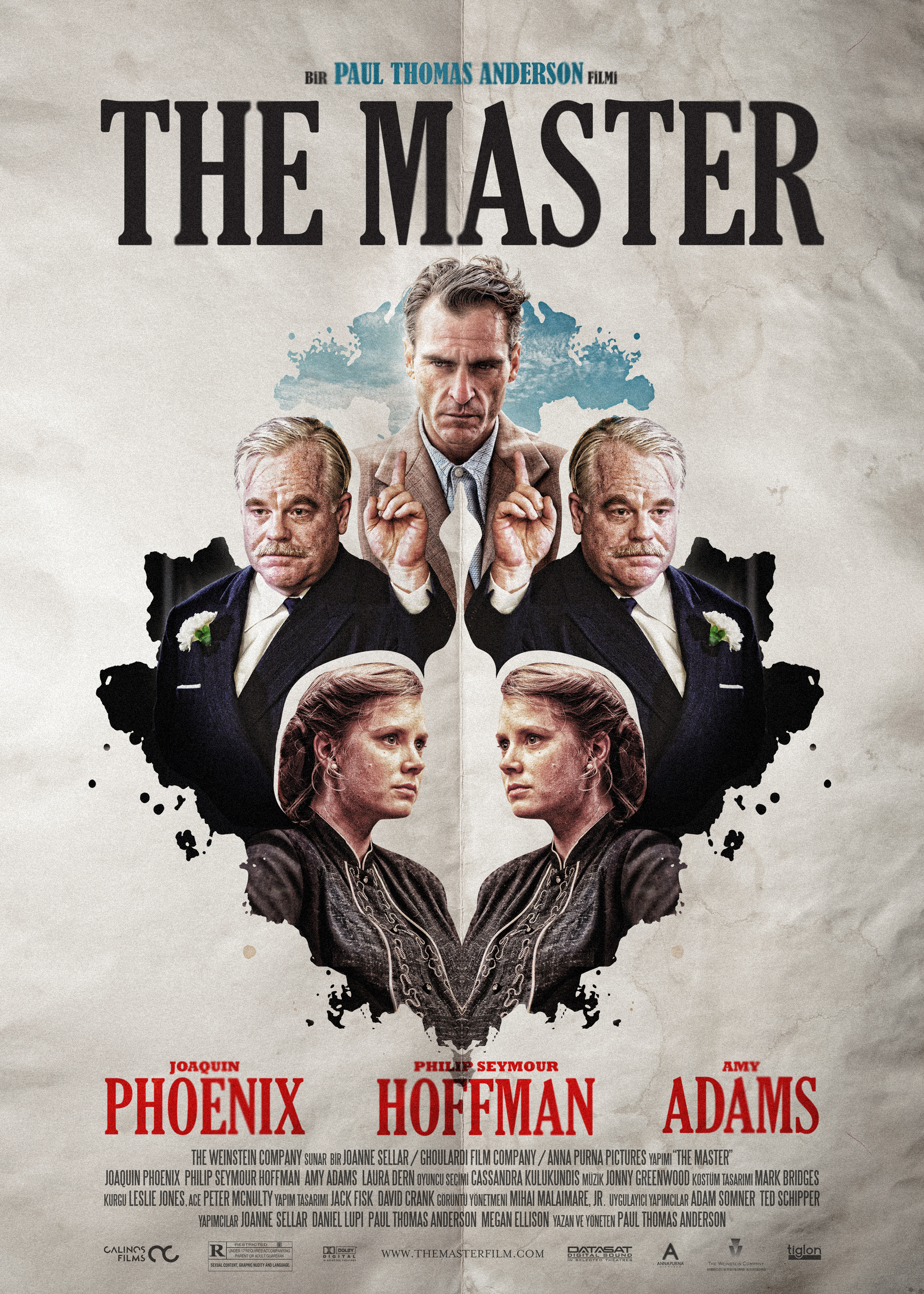
The Master (2012, Paul Thomas Anderson)

Paul Thomas Anderson, after showing total mastery over conventional storytelling in films like Boogie Nights, dives into the wild and experimental with this film. The Master is unconventional and without a clear structure, but it is far from aimless or unfocused.
The film tells the story of two men and the nature of their complex relationship, along with looking at ideas of faith and destiny. The film is complex and brainfrying but slow and relaxed enough to wash over the viewer. I hate using this term too much because I feel it gets thrown around a lot, but this film is truly an incredible experience.
A Field in England (2013, Ben Wheatley)
Easily the least accessible and hardest to describe film on this list. A Field in England is a drugged out and alienating experience, dripping in horror and comedy alike.
Basically, there is not a single other film on this list that comes even close to this films strangeness, yet its power is incredible. The film chills, amuses and utterly horrifies, there are moments from this film that are truly burnt into my memory.
Just, tread carefully with this one.
Her (2013, Spike Jonze)
Spike Jonze interests me. I would personally consider the first two films Jonze directed to be less attributable to Jonze himself and more screenwriter Charlie Kaufman (who also wrote Eternal Sunshine of the Spotless Mind). So when their collaboration ended in the early 2000's, it would be reasonable to assume that Spike Jonze would slip away.
However he then comes along with this utter masterpiece, a film so sweeping and intense in it's emotions and so utterly stunning in its visuals that it takes my breath away to even think about. I am deeply sorry for any dismissiveness I or anyone else may have had towards you Spike Jonze.
And an extra mention has to go to Arcade Fire (A band I really like) for creating the best soundtrack in a film in recent years.
Oh, this alongside The Master transformed Joaquin Pheonix into possibly my favourite living actor. He is just incredible.
The Tale of Princess Kaguya (2013, Isao Takahata)
Isao Takahata is one of the all time unsung heroes of animation. I love every single thing about this film, to the point where I don't really want to write about it. Just please see it, please. I have never cared more for a character in my life, by the end of this film I was literally screaming internally for things to turn out ok for Kaguya.
Possibly the most beautiful looking film ever made, and dripping with the things that make me love film. Emotion, beauty, poetic storytelling. There is probably no film on this list that I want to be seen more, especially considering that it is the unfortunate swansong to the greatest studio in animation history.
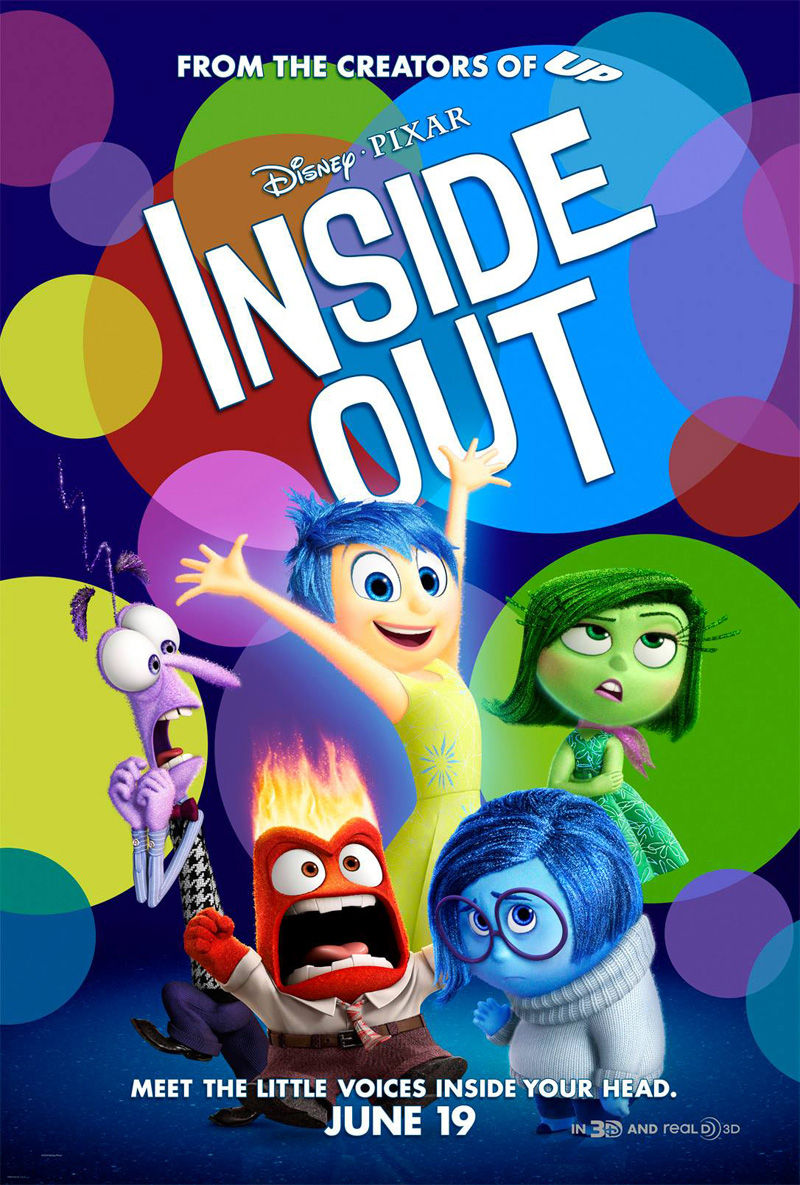
Inside Out (2015, Pete Doctor, Ronnie Del Carmen)
Pixar is a strange entity in the world of animation. Incredibly talented, both artistically and technically, yet somehow a little cold. There is something a little detached and anonymous about them when compared to a studio like Ghibli or even plain old Disney.
Inside Out blew me away however, and represents the biggest leap I could have possibly have hoped for the studio. A film as psychosocially intelligent as it is visually stunning, just mindblowing to see on the big screen.
There are films which genuinely have the power to change the world, and that's what I want Inside Out to do. I want, no, demand that the way society views animation (and film on the whole) matures. We need to challenge ourselves in art or we will begin to roll backwards. I believe Inside Out represents a way forward, and with its success, maybe animation will be used for more in the west than a thing to distract children.
By Jack D. Phillips
Paul Thomas Anderson, after showing total mastery over conventional storytelling in films like Boogie Nights, dives into the wild and experimental with this film. The Master is unconventional and without a clear structure, but it is far from aimless or unfocused.
The film tells the story of two men and the nature of their complex relationship, along with looking at ideas of faith and destiny. The film is complex and brainfrying but slow and relaxed enough to wash over the viewer. I hate using this term too much because I feel it gets thrown around a lot, but this film is truly an incredible experience.
A Field in England (2013, Ben Wheatley)
Basically, there is not a single other film on this list that comes even close to this films strangeness, yet its power is incredible. The film chills, amuses and utterly horrifies, there are moments from this film that are truly burnt into my memory.
Just, tread carefully with this one.
Her (2013, Spike Jonze)
Spike Jonze interests me. I would personally consider the first two films Jonze directed to be less attributable to Jonze himself and more screenwriter Charlie Kaufman (who also wrote Eternal Sunshine of the Spotless Mind). So when their collaboration ended in the early 2000's, it would be reasonable to assume that Spike Jonze would slip away.However he then comes along with this utter masterpiece, a film so sweeping and intense in it's emotions and so utterly stunning in its visuals that it takes my breath away to even think about. I am deeply sorry for any dismissiveness I or anyone else may have had towards you Spike Jonze.
And an extra mention has to go to Arcade Fire (A band I really like) for creating the best soundtrack in a film in recent years.
Oh, this alongside The Master transformed Joaquin Pheonix into possibly my favourite living actor. He is just incredible.
The Tale of Princess Kaguya (2013, Isao Takahata)
Possibly the most beautiful looking film ever made, and dripping with the things that make me love film. Emotion, beauty, poetic storytelling. There is probably no film on this list that I want to be seen more, especially considering that it is the unfortunate swansong to the greatest studio in animation history.
Inside Out (2015, Pete Doctor, Ronnie Del Carmen)
Inside Out blew me away however, and represents the biggest leap I could have possibly have hoped for the studio. A film as psychosocially intelligent as it is visually stunning, just mindblowing to see on the big screen.
There are films which genuinely have the power to change the world, and that's what I want Inside Out to do. I want, no, demand that the way society views animation (and film on the whole) matures. We need to challenge ourselves in art or we will begin to roll backwards. I believe Inside Out represents a way forward, and with its success, maybe animation will be used for more in the west than a thing to distract children.
By Jack D. Phillips
Wednesday, 18 November 2015
Openings: 28 Weeks Later
Last time I looked at an opening that I generally thought was fairly great. In fact I considered it to be the best part of the film on the whole and something of a genre leader in terms of found-footage horror openings. Now I am going to look at an opening that I am far more unsure of, for a film that I really don't like very much.
To start, as this film is a sequel I feel I owe my opinions on the original 28 Days Later. I like it a lot, everything works well and it successfully evolved one of the most important subgenres in horror history. The direction is great, the pace is phenomenal and the acting is great all across the board. It's a great example of a film that I forget that I love until I begin thinking about it.
The sequel is, odd. Larger in scale and yet smaller in character. It is a film that fails to create a sense of epicness, partially due to the strangely restrictive budget (and as a result cheap looking visuals) and also due to an overly tight runtime. However it's opening is notable for how separate it feels from the main body of the narrative, it is a true prologue in the traditional sense.
The opening of the film is the ending of a story that we did not see. The remarkable thing about this opening is that it gives the impression that the characters we are seeing, despite almost no significant screentime, are real people. Character relationships are implied and depth is given in some surprisingly subtle places. The audience gets the sense that even though this group of survivors is being overrun by zombies, that they were compelling and would have been interesting to watch....this brings me to the problem this entire idea raises.
The story that concludes as the film's opening takes place seems like a more interesting narrative than the one that the main film consists of. This manifests in several ways over the course of the film. For example, where as great lengths have clearly been made to create convincing characters in this scene, written to feel real, the main body of the film is severally lacking character, filled with bland an emotionless dialogue giving no semblance of personality. It is confusing to think, but it feels although for care and attention was put into the screenplay of this little scene than the film at large.
A further problem with this scene comes when looking at the use of the iconic 28 Days Later theme song. Intense and memorable, this track was used to great effect in the first film, with small snippets used throughout, with the entire song only being heard over the excellent climax. In Weeks however, the theme song is used immediately in the opening scene. In it's own right the scene is certainly intense enough to justify the song, however it lessens it's use later on in the film, once again giving the impression that more care and priority was given to this eight minute or so sequence that the film's actual narrative.
Perhaps the worst indictment I can give towards this scene is that it feels far superior to the film that it was grafted onto, and it actively undermines and points out the flaws of said films narrative.
It is a true shame, because as a generic zombie movie opening this one works well, it just goes on to highlight how inadequate the following film is, especially when compared to it's predecessor.
By Jack D. Phillips
Openings #2
Thursday, 15 October 2015
Autumn/Halloween
The Book of Life (2014)
At Midnight I'll Take Your Soul (1963)
Halloween (1978)
Halloween 4: The Return of Michael Myers (1988)
The Babadook (2014)
Good Will Hunting (1997)
Watership Down (1978)
It's Such a Beautiful Day (2012)
The Guest (2014)
The Borderlands (2013)
Nosferatu (1922)
Edward Scissorhands (1991)
The Blair Witch Project (1999)
The Lodger (1927)
You're Next (2011)
Scream (1996)
Cabin in the Woods (2012)
The Nightmare Before Christmas (1993)
The Thing (1982)
The Fox and the Hound (1981)
Up (2009)
Fantasia (1940)
Little Shop of Horrors (1986)
Monster House (2006)
Falling Leaves (1912)
Friday the 13th Part VIII: Jason Takes Manhattan (1989)
Return to Oz (1985)
The Nightmare on Elm Street (1984)
By Jack D. Phillips
Tuesday, 6 October 2015
Openings: The Visit (2015)
_poster.jpg)
M. Night Shyamalan is a very easy person to make fun of. For the past decade he has helmed a series of cinematic bombs, eroding his once acclaimed reputation, to the point where most people associate him more for his recent failures rather than his past successes. I am certainly amongst this group, I have seen many of his recent films and have been shocked by their bafflingly bad dialogue, wooden acting and moronic plotting. The Happening in particular is so bad that I find it truly hilarious, perhaps the greatest so bad it's good film in recent memory.
However, although Shyamalan's failures can often amuse me, they can also enrage me. The Last Airbender is a film based upon the animated show Avatar: The Last Airbender. I have a fondness and affection for this show that is difficult to match and my love for it goes back many years. Shyamalan failed to do even a single element of this world that I adored justice and created what may very well be the most anger inducing film I have ever seen. So along with being a punchline in my book, Shyamalan also created what I consider to be my least favourite film of all time.
So with all of that prior baggage concerning this filmmaker, I was surprised when I actually enjoyed his most recent film, The Visit. It is far from great and it is deeply flawed, however there are some elements of it that I found quite admirable. The opening sequence was one of these elements.
The Visit is a found footage horror film, found footage currently being one of the most overdone and tired styles in mainstream western cinema. It has been this way ever since Paranormal Activity revived the genre eight years ago. However Shyamalan decides to base his film far more on the template established by the Blair Witch Project the previous leader in the genre. This means that, although The Visit is still highly derivative, it at least derives itself from something less tired and currently overused.
One of the key elements that the film derives from The Blair Witch Project is basing the narrative around the production of an fictional amateur film, a film within a film. The Visit takes the amateur element further however, by making the fictional film the pet project of a single teenager. This is quite important to the film overall, as the idea of scaling down personalising pre-existing tropes and concepts is central to the tone and atmosphere of the narrative.
In the opening scene we watch an interview being conducted between the teenager (Becca) and her mother. By opening in this way we instantly learn several things about the fictional pet project Becca is conducting. Firstly we assume that this interview will act as the opening of her film, giving us a connection and understanding of the structure of the fictional film and therefore putting the audience in a better position to follow the production throughout the narrative. Secondly we learn from the direction Becca gives her mother that this is a documentary, crating a sense of realism within this entirely fictional aspect of the story. It gives grounding to the film's world at large. Thirdly, by actually going through the effort of setting up a professional style interview, Becca is established as an organised and mature character (or at least filmmaker). This separates Becca from the amateurish characters from The Blair Witch Project, who despite being older conduct interviews with far less direction in less professional locations (usually outside on the street). Probably the best way to summarise the distinction between the character's in Blair and Becca is that Becca's film actual looks like it would be a decent documentary in it's own right, whilst the film in Blair seems roughly shot and repetitive. A trait which sadly carries into the Blaire's actual opening.
All this information is conveyed within three or four seconds of the film beginning and establishes a tone and distinguishes the film from it's direct predecessor. I would argue that despite being highly derivative, this opening improves upon that of Blair due to it's ability to quickly establish the film's tone and character. The opening of Blair is comparatively overly long and repetitive, spending way too much time in the town repeatedly interviewing passers-by with little to no relevant information. Although I would by no means call The Visit a superior film to Blair, it is a great example of how brevity and efficiency can greatly improve a film's opening. After it's clunky opening, Blair has to struggle to make up for lost time and reignite the audience's interest, where as The Visit is able to continue building upon what was established within it's first scene.
The actual contents of Becca's interview gives further details into the character's and establishes the story's themes. We learn of her mother's turbulent relationship with her own parents, as well as Becca's disdain for her deadbeat and absent father. Parallels are immediately established and the inner workings of this family are pushed as important. The film will continue to build upon and add complexity to these familial themes and relationships in future scenes, however those scenes would fall flat if not for the solid groundwork laid down here.
The Visit is also an excellent example of a bookend formatted film, where the beginning and ending exist to wrap up the narrative and are noticably destinct from the main meat of the film. The ending scene is almost identical to the opening, Becca is interviewing her mother about the same topics (the past with her parents) in the exact same location. However in this ending the Mother is willing to divulge far more than before, as a result of the events which occur during the main body of the narrative. This ending brings closure to the narrative and ties up the themes of the film nicely, as well as being another example of how the film bases almost all of it's drama upon the simple foundation established in the opening interview.
The opening scene of The Visit is a very strong example of how an opening scene can make or break a film. If the narratives engaging and fairly moving themes of family and forgiveness were not established so well here, along with the roles and basic personality of our lead character, the entire film would have fallen apart completely. This scene is probably the strongest piece of filmmaking Shyamalan has helmed in over a decade and if we are incredibly lucky, it may signal a new stage in the career of the once crowned Prince of failure.
By Jack D. Phillips
Openings #1
The opening scene of The Visit is a very strong example of how an opening scene can make or break a film. If the narratives engaging and fairly moving themes of family and forgiveness were not established so well here, along with the roles and basic personality of our lead character, the entire film would have fallen apart completely. This scene is probably the strongest piece of filmmaking Shyamalan has helmed in over a decade and if we are incredibly lucky, it may signal a new stage in the career of the once crowned Prince of failure.
By Jack D. Phillips
Openings #1
Tuesday, 15 September 2015
To Be Watched
Annie Hall (1977)
The Good, the Bad and the Ugly (1966)
Boogie Nights (1997)
Blow Out (1981)
Pi (1998)
M (1931)
2001: A Space Odyssey (1968)
Silence of the Lambs (1991)
Manhunter (1986)
A Clockwork Orange (1971)
Birdman (2014)
The Wrestler (2008)
Halloween (1978)
Peeping Tom (1960)
Through a Glass Darkly (1961)
Man With a Movie Camera (1929)
Bronson (2008)
Sunrise: A Song of Two Humans (1927)
Pinocchio (1940)
Red Hot Riding Hood (1943)
High and Low (1963)
Lost in Translation (2003)
Psycho (1960)
Blow Out (Film Within a Film) (1981)
Oldboy (2003)
Exit Through the Gift Shop (2010)
The Departed (2006)
The Conversation (1973)
The Tale of Princess Kaguya (2013)
Rejected (2000)
By Jack D. Phillips
Tuesday, 11 August 2015
Alone.
Top Left-Bottom Right
The Machinist (2004)
The Master (2012)
The Thing (1982)
There Will Be Blood (2007)
Boogie Nights (1997)
Dead Man Walking (1995)
Ivan;s Childhood (1962)
Dead Man's Shoes (2004)
Red Desert (1964)
Winter's Light (1963)
Drive (2011)
I Saw the Devil (2010)
Attack on Titan (2013)
Psycho (1960)
Cowboy Bebop (1998-1999)
Annie Hall (1977)
The Silence of the Lambs (1991)
Yojimbo (1961)
The Old Dark House (1932)
The Terminator (1984)
Citizen Kane (1941)
Tokyo Story (1953)
Blow Out (1981)
M (1931)
The Meaning of Life (2005)
The Blair Witch Project (1999)
Little Malcolm (1974)
Ringing Bell (1978)
At Midnight I'll take your Soul (1964)
Eternal Sunshine of the Spotless Mind (2004)
The Shining (1980)
Grave of the Fireflies (1988)
By Jack D. Phillips
Wednesday, 15 July 2015
The Blair Witch Project (1999)
film, however
undeniably effective in it's atmosphere and character building.
This film has been idealised, demonized and mythicised since it's release in 1999. With the possible exception of Scream, there is no other horror film in the past two decades that has been both this influential, and this destructive. This film can both be credited with the creation of a bold new stylistic era of horror filmmaking, found footage, and the birth of a destructive and cliché template for lazy filmmaking, found footage. The genre this film helped to popularise has certainly had a profound, and in my opinion largely negative, impact on the current landscape of western horror. However how does the film itself hold up? Well in my opinion, better than expected.
The film's largest flaw is it's slow and clunky opening. A large amount of time is spent in the hometown of the three main characters and little of substance occurs. These sequences do little to enhance the film's narrative or atmosphere and today are quite boring to watch. The only purpose these scenes have was to contribute to the film's viral marketing campaign, which successfully tricked thousands into believing the events of the film were real. The faux documentary feel of the opening adds credibility to this trickery, however from the perspective of somebody who was not affected by the marketing, these scenes do little other than damage the film's overall pacing.
After this weak start, the film truly begins to unfold. Our three main characters all feel like real people and they are clearly defined from each other. The bulk of the film follows the three amateur filmmakers and their slow descent into madness and terror. Every step of this descent is understandable and the reactions of the characters to their increasingly hostile environment is eerily relatable, to the point where I found myself wondering how I would react in a similar situation. This is the main reason why the film works, we are scared because the characters feel real and are convincingly terrified. Their situation is caused by a mixture of simple incompetence and paranormal interference and I feel there is a conversation to be had about which of those two elements contributed most to their demise. Overall the simple and eerie portrayal of the characters hits home, they feel like people the audience could have genuinely known rather than actors with a script.
The film is also able to achieve incredible things with very little. This is perhaps the most stripped down mode of horror filmmaking imaginable, scaring the audience with sounds, stones and sticks. As described above, the effect is largely achieved due to the strongly defined and well acted characters, however there is also a basic creepiness to these elements. The sounds we hear from within the tent are horrifying and grotesque, the sticks genuinely form occultic and unnerving images and begin to resemble some kinda of abomination of nature. The film's cinematography is at it's strongest as it fetishisticly sweeps over the bundles of twigs suspended in the tress. The iconic symbol that the film spearheaded it's marketicing with is perhaps the strongest example of this eerie imagery.
Overall I would call this film a near masterpiece. My enjoyment is somewhat tainted by the scourge of largely inferior found footage knockoffs which followed, along with the undeniably weak opening ten minutes. However if you are able to look past these hindrances, you will find a powerful and still largely unique horror experience.
By Jack D. Phillips
A Zoom Film Review
Subscribe to:
Posts (Atom)