Showing posts with label Analysis. Show all posts

Wednesday, 18 November 2015

Openings: 28 Weeks Later


Last time I looked at an opening that I generally thought was fairly great. In fact I considered it to be the best part of the film on the whole and something of a genre leader in terms of found-footage horror openings. Now I am going to look at an opening that I am far more unsure of, for a film that I really don't like very much.

To start, as this film is a sequel I feel I owe my opinions on the original 28 Days Later. I like it a lot, everything works well and it successfully evolved one of the most important subgenres in horror history. The direction is great, the pace is phenomenal and the acting is great all across the board. It's a great example of a film that I forget that I love until I begin thinking about it.


The sequel is, odd. Larger in scale and yet smaller in character. It is a film that fails to create a sense of epicness, partially due to the strangely restrictive budget (and as a result cheap looking visuals) and also due to an overly tight runtime. However it's opening is notable for how separate it feels from the main body of the narrative, it is a true prologue in the traditional sense.


The opening of the film is the ending of a story that we did not see. The remarkable thing about this opening is that it gives the impression that the characters we are seeing, despite almost no significant screentime, are real people. Character relationships are implied and depth is given in some surprisingly subtle places. The audience gets the sense that even though this group of survivors is being overrun by zombies, that they were compelling and would have been interesting to watch....this brings me to the problem this entire idea raises.


The story that concludes as the film's opening takes place seems like a more interesting narrative than the one that the main film consists of. This manifests in several ways over the course of the film. For example, where as great lengths have clearly been made to create convincing characters in this scene, written to feel real, the main body of the film is severally lacking character, filled with bland an emotionless dialogue giving no semblance of personality. It is confusing to think, but it feels although for care and attention was put into the screenplay of this little scene than the film at large.

A further problem with this scene comes when looking at the use of the iconic 28 Days Later theme song. Intense and memorable, this track was used to great effect in the first film, with small snippets used throughout, with the entire song only being heard over the excellent climax. In Weeks however, the theme song is used immediately in the opening scene. In it's own right the scene is certainly intense enough to justify the song, however it lessens it's use later on in the film, once again giving the impression that more care and priority was given to this eight minute or so sequence that the film's actual narrative.

Perhaps the worst indictment I can give towards this scene is that it feels far superior to the film that it was grafted onto, and it actively undermines and points out the flaws of said films narrative. 

It is a true shame, because as a generic zombie movie opening this one works well, it just goes on to highlight how inadequate the following film is, especially when compared to it's predecessor. 

By Jack D. Phillips
Openings #2

Tuesday, 6 October 2015

Openings: The Visit (2015)


M. Night Shyamalan is a very easy person to make fun of. For the past decade he has helmed a series of cinematic bombs, eroding his once acclaimed reputation, to the point where most people associate him more for his recent failures rather than his past successes. I am certainly amongst this group, I have seen many of his recent films and have been shocked by their bafflingly bad dialogue, wooden acting and moronic plotting. The Happening in particular is so bad that I find it truly hilarious, perhaps the greatest so bad it's good film in recent memory.

However, although Shyamalan's failures can often amuse me, they can also enrage me. The Last Airbender is a film based upon the animated show Avatar: The Last Airbender. I have a fondness and affection for this show that is difficult to match and my love for it goes back many years. Shyamalan failed to do even a single element of this world that I adored justice and created what may very well be the most anger inducing film I have ever seen. So along with being a punchline in my book, Shyamalan also created what I consider to be my least favourite film of all time.

So with all of that prior baggage concerning this filmmaker, I was surprised when I actually enjoyed his most recent film, The Visit. It is far from great and it is deeply flawed, however there are some elements of it that I found quite admirable. The opening sequence was one of these elements.

The Visit is a found footage horror film, found footage currently being one of the most overdone and tired styles in mainstream western cinema. It has been this way ever since Paranormal Activity revived the genre eight years ago. However Shyamalan decides to base his film far more on the template established by the Blair Witch Project the previous leader in the genre. This means that, although The Visit is still highly derivative, it at least derives itself from something less tired and currently overused. 

One of the key elements that the film derives from The Blair Witch Project is basing the narrative around the production of an fictional amateur film, a film within a film. The Visit takes the amateur element further however, by making the fictional film the pet project of a single teenager. This is quite important to the film overall, as the idea of scaling down personalising pre-existing tropes and concepts is central to the tone and atmosphere of the narrative.

In the opening scene we watch an interview being conducted between the teenager (Becca) and her mother. By opening  in this way we instantly learn several things about the fictional pet project Becca is conducting. Firstly we assume that this interview will act as the opening of her film, giving us a connection and understanding of the structure of the fictional film and therefore putting the audience in a better position to follow the production throughout the narrative. Secondly we learn from the direction Becca gives her mother that this is a documentary, crating a sense of realism within this entirely fictional aspect of the story. It gives grounding to the film's world at large. Thirdly, by actually going through the effort of setting up a professional style interview, Becca is established as an organised and mature character (or at least filmmaker). This separates Becca from the amateurish characters from The Blair Witch Project, who despite being older conduct interviews with far less direction in less professional locations (usually outside on the street). Probably the best way to summarise the distinction between the character's in Blair and Becca is that Becca's film actual looks like it would be a decent documentary in it's own right, whilst the film in Blair seems roughly shot and repetitive. A trait which sadly carries into the Blaire's actual opening.

All this information is conveyed within three or four seconds of the film beginning and establishes a tone and distinguishes the film from it's direct predecessor. I would argue that despite being highly derivative, this opening improves upon that of  Blair due to it's ability to quickly establish the film's tone and character. The opening of Blair is comparatively overly long and repetitive, spending way too much time in the town repeatedly interviewing passers-by with little to no relevant information. Although I would by no means call The Visit a superior film to Blair, it is a great example of how brevity and efficiency can greatly improve a film's opening. After it's clunky opening, Blair has to struggle to make up for lost time and reignite the audience's interest, where as The Visit is able to continue building upon what was established within it's first scene.  

The actual contents of Becca's interview gives further details into the character's and establishes the story's themes. We learn of her mother's turbulent relationship with her own parents, as well as Becca's disdain for her deadbeat and absent father. Parallels are immediately established and the inner workings of this family are pushed as important. The film will continue to build upon and add complexity to these familial themes and relationships in future scenes, however those scenes would fall flat if not for the solid groundwork laid down here.

The Visit is also an excellent example of a bookend formatted film, where the beginning and ending exist to wrap up the narrative and are noticably destinct from the main meat of the film. The ending scene is almost identical to the opening, Becca is interviewing her mother about the same topics (the past with her parents) in the exact same location. However in this ending the Mother is willing to divulge far more than before, as a result of the events which occur during the main body of the narrative. This ending brings closure to the narrative and ties up the themes of the film nicely, as well as being another example of how the film bases almost all of it's drama upon the simple foundation established in the opening interview.

The opening scene of The Visit is a very strong example of how an opening scene can make or break a film. If the narratives engaging and fairly moving themes of family and forgiveness were not established so well here, along with the roles and basic personality of our lead character, the entire film would have fallen apart completely. This scene is probably the strongest piece of filmmaking Shyamalan has helmed in over a decade and if we are incredibly lucky, it may signal a new stage in the career of the once crowned Prince of failure.

By Jack D. Phillips
Openings #1

Monday, 27 April 2015

How many ways can a similar story be told?

I was recently asked to write a piece for my film class' new blog. I was actually surprised by how well it came out, and am actually happy to share it here on my personal blog. I hope you enjoy this little slice of film theory.

How many ways can a similar story be told?

This year, this Film Studies has looked at four world cinema films for analysis and comparison. The films are La Haine, City of God, Tsotsi and Once Were Warriors. These films all demonstrate ideas and concepts that stem from the cultures in which they were created, however despite this all the films share some common ideas and concepts. So this raises the question, How many ways can a similar story be told?

Well, that depends highly on what the similarities are. For example Tsotsi and Once Were Warriors, both incorporate the idea of family into their narratives, more specifically of the violence and horror that can befal families in certain environments or cultures. Tsotsi does this through flashback, non-linearly retreating into the past to show the effects of the titular character’s past on his current actions. We see how the violence and death that surrounded his childhood has warped his view on the world, turning him into a predatory thug.

Some of these ideas are also displayed in Once Were Warriors, however the framing has changed. The horrors of a dysfunctional family is far more pressing in this film, the danger and corruption is in the present. Tsotsi often shows it’s flashbacks in the form of dreams, the character will awake to end one of these sequences for example. However, Once Were Warriors lacks this fantastical barrier. The pain and violence is immediate in this film, and the details are shown far more explicitly.

The results of these different styles are numerous. Tsotsi is a softer film, the emotions and ideas of what it means to come from a broken and violent family are felt very strongly, even if the details are vague. Furthermore the method chosen by Tsotsi allows for a greater sense of character change, we see the character as a child, a predatory thug and finally as a man. Once Were Warriors’, approach however is far more shocking. The film aims to make the viewer feel uncomfortable and sick, with the acts of violence being of greater importance than the characters participating. This film is far more visceral, aiming to move the audience in a more physical manner.

This is only a single example of how similar ideas can be used to totally different effect. There are several more present across the four films, and more importantly, across all of cinema. Other good examples are: how gun violence is portrayed across the four films, the concept of childhood in Tsotsi, Once Were Warriors and City of God, and substance abuse is displayed in City of God and Once Were Warriors.

These ideas and themes are great jumping on points for analysis, and comparing four films which differ so greatly and share so much is a wonderful way to begin thinking about film in a more critical fashion. We have four films to discuss in this part of the course, so compare and contrast their ideas and use of themes. Just some thoughts from me.

By Jack D. Phillips

Wednesday, 1 April 2015

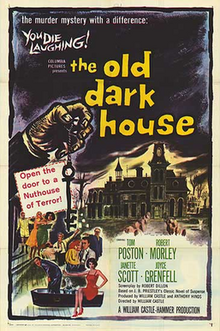
The Old Dark House (1932) [An analysis on James Whale]

One of the brightest
gems from the
master of camp-horror;
James Whale


I adore the legendary horror director James Whale, and would consider him one of my greatest influences. Therefore, this review will look a little bit more at why this filmmaker was so successful in his work and remains one of the most beloved American filmmakers of the 1930's, rather than the details of this film in particular.

Firstly, Whale is perhaps best known for directing the great milestone of horror; Frankenstein, and it's even grander sequel Bride of Frankenstein. Both these films are often considered to be the top films of the entire 'Universal Horror' catalog and remain two of the most imitated and influential films in the entire genre. The primary reason for this is quite simple in my eyes, the pacing. Tod Browining's Dracula (the other highly influential Universal horror film released the same year as Frankenstein), although still a classic in many ways, suffers from some pretty poor pacing in comparison to Whales' film. Dracula is a jerky film, which stops and starts quite erratically, never flowing as a Gothic horror should in my opinion. It's buildup is often cut too short, and expository dialogue is heavy, killing the atmosphere in places. Frankenstein is different however, it flows perfectly creating a natural and genuine tension. I cannot nail down the exact aspect of the production that gave Whale this advantage, however I would say it came down to stronger editing Whale employed. Dracula often cut too quickly for my taste, and did not allow it's scenes to develop properly before ending them. I must also point out here that I am not attempting to scapegoat Dracula or Todd Browning, as these are issues which permeate many of Universal's earlier films. This what makes Whale so interesting to me, how ahead of the competition he was for the time.

Beyond the pacing of his films, Whale's characters have a particular charm that makes them instantly recognisable. Although Whale did not write his own scripts, he clearly chose his screenplays very carefully, picking the ones which would match his dark sense of humor perfectly. It is here where The Old Dark House is particularly impressive. The film boasts a large and varied group of characters, and yet makes them all insanely memorable within a relatively tight running-time. This is most likely due to the exaggerated and comedic acting style Whale encouraged his actors to use, often referred to as camp. I would argue that the style deserves more dignity then being lumped in with the work of Ed Wood, however it is undeniable. Whales' characters are loose, fun and exaggerated, making them highly entertaining and lovable to watch. However there is far more wit within Whales' films than those of other 'camp' directors, and he was a master at crafting compelling interactions between characters.  A good example of this is The Invisible Man, which is silly and goofy in many ways, yet has a powerful and fairly pathotic undercurrent which comes to a head in it's ending, doing this through the increasingly erratic and unstable actions of the main character and his interactions with the supporting cast. The Old Dark House also features some of the best interactions I have ever seen in a horror film and they really showcase the actors charms and talent. I love every character in this film, and I would be hard pressed to find a single Whale character whom I do not like.

The final aspect of Whale which I love is his cinematography, which is also particularly strong here.  Whale took much inspiration from German expressionism, with his heavy use of sharp angles and intense shadows. The titular house of this film genuinely feels alive, with it's constant dark shroud and convoluted layout. The fire used in the climax (a common motif within Whales' finales) pops beautifully against the shadows that dominated the preceding hour, and it is immediately exciting to the eyes. Whale was also a big fan of intense close-ups, using them frequently here and in Frankenstein to showcase the disgusting expressions of the monsters (both played by Boris Karloff), and has this unnervingly personal affect on the viewer, due to the closeness of the image. You can almost smell the violent butler's alcohol drenched breath in The Old Dark House.

In conclusion, I feel this film is one of Whales' best. It features some of his best characters, his best cinematography and lighting and is consistently entertaining to watch. I would still consider Bride of Frankenstein to be my overall favourite James Whale film, which I sadly didn't discuss here at all (perhaps I'm saving that for it's own spotlight, *wink*) however I would highly recommend his work to any hardcore horror fan.

By Jack D. Phillips
A Zoom Film Review