Showing posts with label Short Film. Show all posts

Wednesday, 25 March 2015

Nocturne (1980) [Short Film]


It must be hard to live
inside Lars von Trier's 
head.


I have never seen a film from acclaimed filmmaker Lars von Trier before this short. I decided that It would be best to start at the beginning of his career to truly begin understanding where his work comes from, and so I arrived at this feverish little film.

Nocturne is a brief little journey into the fears and idiosyncrasies of the director, who is clearly a troubled man in many areas (look up interviews with him, he is both hysterically awkward and quiet miserable in many that I have seen). Nocturne visually brings these troubles to life in a surprisingly sophisticated manner. The visuals in this film are remarkably advanced and unique for a student film, creating a horrific and captivating atmosphere and effect. The opening shot in particular is a genuinely horrifying and made me feel uneasy to watch, and from that point the rest of the film is drenched in awkward paranoia.

Overall this film is a powerful shot of creepy uneasiness that has only increased my interest in the director. It is available to watch on Youtube and I highly recommend giving it a try, it's only eight minutes long after all.

By Jack D. Phillips
A Zoom Film Review

Tuesday, 17 March 2015

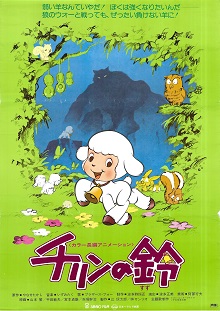
Ringing Bell (1978) [Short Film]

A powerful and deeply
moving tale of revenge and
identity. A true classic
of Japanese animation.


Ringing Bell is notorious amongst animation fans for it's dark and sharp shift in tone the film experiences after the first ten minutes. The contrast between the extremely gentle and soft animation of the film's start and the jagged, dimly lit animation of it's end is also an often discussed topic, overall making this film legendarily boundary pushing within the world of animation. However despite the film's infamy, banned in Kazakhstan after nation-wide rioting over the film's DVD release, it is something of a cult classic and is loved by many, including myself.

The most continuous and debated element of the film is certainly it's animation. Many consider the two styles it blends together to be jarring and distracting, an understandable complaint. In my opinion however, the film excellent use of watercolour backgrounds helps to merge the two styles together, blurring the lines between the two and creating a natural and beautiful merging of the styles. 
The jagged shadows of the ending and fluffy pastel colours create a powerful contrast rather than a distracting one, separating the world's of sheep and wolf in a poetic fashion. Further praise must go towards the sheer scope of the films animation, presenting some of the most impressive scenic vistas that I have ever seen in drawn form, matching the almost Shakespearean scale of the storytelling. However the most amazing aspect of the animation in my opinion is the wolf. He is terrifying, a living strip of shadow with piercing white eyes and a eerily silent manner of movement. It is worth watching the film for this wolf alone if nothing else.

Ringing Bell also features some exceptional sound design. The early synth sound effects start the film sounding whimsical and cheerful, accompanying the harmless and sweet visuals. By the end however they morph into almost demonic sounding mechanical fuzz, representing the de-humanizing journey the main character takes and the brutality of the film's world. In general I would use this film as an example of the potential potency of a synth score, both to create levity and horror.

Finally, the film's actual storyline, which is heralded as both a beautiful modern fable and a trite, braindead propaganda piece. As I have already used the word 'Shakespearean' you can tell where I land. The film's message is superficially simple yet connects and flowers into various other issues. The loss of one's identity, the meaning of being a predator, the effects of revenge and the power of parental authority. All these concepts are weaved into a mere forty-five minute short and it is breathtaking.

Overall, watch this short on Youtube (I feel I have wrote those words numerous times this month), as it is available in both dubbed and subbed forms (I watched the sub). This film will certainly stir emotions and regardless of your opinion, it will at least make you feel something. I love this film, and I hope I can encourage further discussion about it.

By Jack D. Phillips
A Zoom Film Review

Saturday, 14 March 2015

Falling Leaves (1912) [Short Film]

A powerful and poetic
slice of melodrama.
A powerful portrait of
 innocence and
childlike determination.


I first became aware of this little gem from Mark Cousins' excellent documentary The Story of Film, and I was surprised to find it in great quality on Youtube. Falling Leaves is a fantastical and whimsical film from the pre-Griffith silent era of cinema. It was directed by Alice Guy, often considered to be the first great female director, and is held as a classic of early French film. 

The most important aspect of the film is it's powerful imagery. The simple metaphor the film bases itself around, falling leaves represent the inevitability of time, is shown gloriously and leads to what is now one of my favourite visuals of the entire silent era. Falling Leaves also boosts an impressive child performance, the earliest example of one I can think of. Young Magda Foy shows a strong will and relentless determination which is highly admirable and moving to watch unfold. This character is an adorable star of the era for me now. Furthermore the film handles the sensitive emotions of serious illness elegantly, showing the wider effects on the family and by extension tells it's story very well.

Overall, Falling Leaves is a simple yet perfectly balanced piece of early melodrama. I recommend tracking it down on Youtube, for this is a film which I feel deserves a bit more recognition and praise than it seems to receive.

By Jack D. Phillips
A Zoom Film Review

Monday, 9 February 2015

Ohayo [Short Film] (2008)

A final encore from perhaps the most tragically 
short-lived auteurs of the last 50 years. Goodbye Kon.

Yet another review of a film less than five minutes long. I'm actually enjoying reviewing film in this brief format because they allow more abstract thinking around the film itself rather than simply covering the same points in every single review (something I aim to outgrow when I become a less mediocre writer).

Moving past that, Satoshi Kon.

A master. 

I know consider Tokyo Godfathers one of my all-time favourite films, and I simply cannot wait to see Perfect Blue and especially Paprika. So I consider myself a fairly big fan of the director, if a neophyte when it comes to his work. Ohayo is effectively a final goodbye from the man before his untimely passing. 

The film can essentially be viewed as a tiny microcosm for his entire filmmaking identity, or at least as I know it. Surrealist, based around a simple yet curiously unexplored subject, focused upon femininity and above all else, beautiful. Despite being so short, there is something achingly sweet about it. I got a similar vibe from Black Breakfast, so perhaps there is something inherently smile inducing about getting an entire cinematic experience in the time it takes to eat a sandwich, yet being left with a vision that'll stick with you for the rest of the day.

Watch Ohayo on Youtube for free. Do it to honor the final work of a great man and to enjoy a wonderfully supple slice of animated beauty.

By Jack D. Phillips
A Zoom Film Review
Saturday, 7 February 2015

Black Breakfast (2008) [Short Film]

A four minute mood piece on the polluted nature of Chinese culture. Very effective for what it is.

This is perhaps the most obscure thing I will ever cover on this blog. A four minute piece of ambient storytelling from the equally obscure Stories on Human Rights anthology film. The reason there's no poster on this review is because I could not find one. The only reason I was made aware of this film, was because of the wonderful site Taste of Cinema, which I highly recommend checking out if you haven't already.

Beyond the odd nature of this film, it is actually quite good. An effective and poetic little piece about the overwhelming pollution of China. I do not know how literal the imagery is meant to be, due to my lack of knowledge on the subject, however I am more interested after seeing this film.

In conclusion, all I can say is that I am curious to find the other twenty-two pieces to this anthology and see how they work as a bigger picture.

By Jack D. Phillips
A Zoom Film Review
Documentary  Month 2015 #4

Saturday, 31 January 2015

The House is Black (1963) [Short Film]

http://www.firouzanfilms.com/images/TheFirouzanFifty/TheHouseIsBlack/TheHouseIsBlack_DVD.jpgA poetic and stunningly
effective documentary.


To follow my first 'Documentary Month' review, here is another lauded and highly influential film from Iran, however with a radically different style and purpose.


This film is a beautifully shot and stunningly empathetic work from a director who was not even a filmmaker by trade. Forugh Farrokhzad, mostly know for her highly influential poetry, hand crafted this stunning insight into a leper colony.

The film features some of the most ingenious editing and cinematography I have seen in a documentary like this. There are some stunning and heartbreaking shots of the inhabitants of the colony, showing the suffering and pain of these people with a bold rawness, uncommon for the time of the film's release.There are several moments where the film drifts from documenting the subject in question, and instead begins to poetically muse the nature of humanity through the visuals. This film is undoubtedly the product of a highly unique and distinct artistic voice, who tragically died far too young to continue this raw expression.

The documentary weaves its way through a number of themes within it's brief runtime. Spirituality, hope, beauty and various other ideas, whilst also describing and showcasing the intense struggles felt by the inhabitants of this odd community. The high-reaching thematic elements and the educational information blend together fantastically.The film crafts these themes through a combination of lovely narration, from the director herself,  and the film's aforementioned excellent editing. By intercuting shots of elderly sufferers of the disease to children, the audience is given a sense of the wide and indiscriminate nature of the disease. Touches like this are what makes this film a masterpiece of poetic realism in my eyes. So much is conveyed with so very little.


In conclusion, the film is a little miracle. This film can be credited with planting the roots which would later bloom into the Iranian new wave, and is often though as the earliest true masterpiece of Iranian cinema. I am most reminded of the classic 1930's film Freaks when I think of this film. A strange, poetic and thoroughly engrossing voyage into a relatable yet alien world, I would recommend both films highly. The House is Black is available on YouTube for free, in good quality (however the subs are a little tough to read at times) and I would highly recommend it.


By Jack D. Phillips

A Zoom Film Review
Documentary Month 2015 #2

Tuesday, 6 January 2015

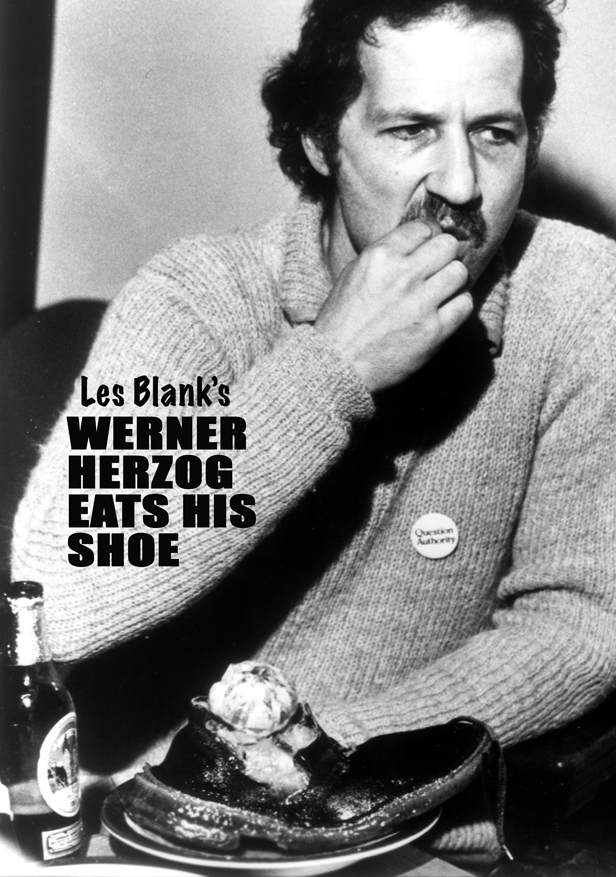
Werner Herzog Eats His Shoe (1980) [Short Film]

An amusing, breezy 
and insightful 
little documentary short.


Although I still have not seen one of his own films, I feel justified in saying that Werner Herzog is one of the most interesting people in the the world of cinema. His bleak insights and depressing outlook can give birth to some wonderful insights, and he has spawned more than a couple amusing stories, such as saving Joaquin Pheonix's life in a car crash (look it up, it's hysterical). However this film allows Herzog his true platform to give his opinions on filmmaking, cooking and various other topics. It was wonderful to say the least.

Prolific documentarian Les Blank handles the direction and does an excellent job. He creates an inviting atmosphere and everything that is said by Herzog and the other participants feels very natural. I give the director huge credit for allowing Herzog to dictate the film's tone and for not attempting to hijack it for his own purposes. The film is also well shot, with some amusing tracking shots of the shoes in question as they march to their destiny.

The most important thing in this film however is definitely Herzog himself. The shoe eating is used as a catalyst to talk about some of the more unbelievable aspects of film-making and gives some nice insights into Herzog as a person, as well as a artist. Herzog also makes a point about what the bet was about in the first place, a young filmmaker who was somehow able to produce the film of his dreams with minuscule resources. It is clear throughout the short that Werner clearly respect smaller independent film and gives both advice and insight towards the trials faced by such filmmakers.

Overall I love this short and I recommend that you track it down on Youtube, or better yet on the Werner Herzog BFI collection.

By Jack D. Phillips
A Zoom Film Review