Monday, 16 February 2015

15 More Directors I have little/no experience with (15-11)

A few months ago, I released a list focused upon the forty directors I needed to experience more of. As time has gone on I have discovered even more directors I need to see more work of. So here is a list of the fifteen directors not included on that original list, who probably should have been.


15. Abel Gance

 photo aff_la_roue-02.jpg

Recently I have been watching The Story of Film: An Odyssey by Mark Cousins. I will probably cover this wonderful documentary series at point during this month, however one of the interesting filmmakers I discovered during the first few episodes was Abel Gance. Considered the grandfather of French impressionism and the inspiration for many filmmakers in the decades to follow, perhaps most significantly Jean Cocteau. La Roue appears to be one of the most daring films of the early 1920's, and his four-hour epic Napoleon seems to be a sublime masterwork from only the ffew frames I have seen.

14. Michelangelo Antonioni


Considered a master of Italian neo-realism. I am fervently fascinated by his film Blow-up and it's highly influential standing amongst filmmakers across the world. Not too much more to say about this filmmaker, other than I should have included him along the other legendary Italian filmmakers on my first list.

13. Xavier Dolan


This Canadian filmmaker is perhaps the most significant homosexual director working today. His highly acclaimed body of work despite his youth shows exceptional raw talent despite inexperience. Now all I need to do is see some of his films so I can praise him even more. Would be higher on this list if not for his fairly small filmography as of the time of writing this list.

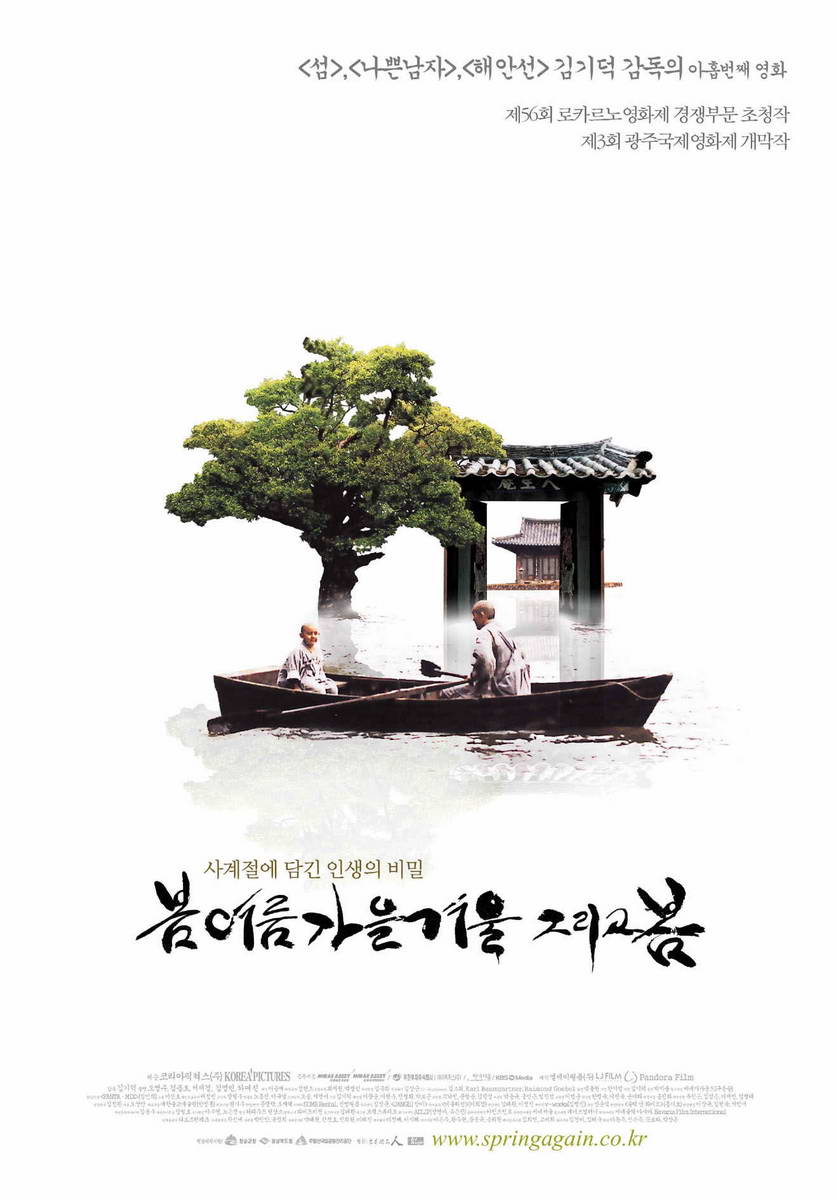
12. Kim Ki-duk


Unlike many on this list, I did consider this filmmaker for the original list. I eventually cut him as I felt there wasn't enough to truly intrigue me. Recently however Taste of Cinema posted an interesting retrospective on this director's career. From this I have gotten a better idea of exactly how influential this director is to contemporary Asian cinema, and I am now curious to say the least.

11. Spike Lee


I will admit something here. This filmmaker was not on the previous list based on entirely petty reasons. Spike Lee directed the Oldboy remake, a concept which angers me so much that I have effectively avoided the director ever since. I now realise how petty it is to to dislike an artist based on a single recent work and I now look forward to seeing his films for what they are. Namely the premier works in African-American cinema, from one of the most assertive directors working today.

By Jack D. Phillips
A Zoom Film List
Part 1 of 3


Exit Through the Gift Shop (2010)


Funny, inventive,
 poignant
and wonderfully
 creative. I have
nothing but good
 things to say
about this documentary.


This is a 'lightning in a bottle' film. It is hard to comprehend how so many potent elements, and chance meetings had to happen in order to bring this film to life. This is one of the most unique and innovative films I have ever seen, and it all occurred basically by chance.

I will not spoil how 'filmmaker' Theirry Guetta and street art legend Banksy meet, or the events that transpire after they cross paths, however I will say that it creates perhaps the most compelling documentary filmmaking I have ever seen.  Both characters are extremely fascinating subjects for a documentary, one a confused and awkward wannabe artist, the other the shadowy king of his medium. They are both seemingly complete opposites, yet at the same time represent the same artistic and rebellious spirit. 

The film features footage taken over the course of many. many years giving a sense of scale undreamed of by other films. I graciously thank every person who had to rummage through the literal weeks worth of footage to make this film a reality, yet succeed in editing together such a concise and poignant work. This film could have easily stretched into an unnecessary length within lesser hands, however here the story is kept brief, allowing for a fun and playful tone rather than being monotonous and preachy.

I firmly believe that this film can be enjoyed by any audience. As a wry comedy, as a serious insight into the world of street art, as an underdog story about a man learning to channel his seemingly limitless passions into something worthy of validation or as a discussion on the nature of art and what it means to devote one's life to it's creation. All these ideas are gaily weaved into what my be the most complete and narratively cohesive documentary I have ever seen. 

In conclusion, I highly recommend this film. Despite the dazzlingly high quality of documentaries i have seen this month, I do not hesitate in calling this the greatest I have covered so far. If it remains that way by the end of the month, then I will still be enormously satisfied with what I discovered in this masterpiece. 

By Jack D. Phillips
A Zoom Film Review
Documentary Month 2015 #5

Sunday, 15 February 2015

The Past Few Days

I am sorry about the lack of content over the last few days. This is simply due to not being able to fit writing into my schedule over the last week of my school term. It is now half-term however, so I have prepared a flood of content to be released over the next 4-5 days. This includes approx. 8 reviews, a list and an entry covering my thoughts the Academy Award nominations, as I have now seen a fair number of the films relevant to the event. Sorry for the lull in content, however I will get back on track later today.

By Jack D. Phillips
A Zoom Film Review

Wednesday, 11 February 2015

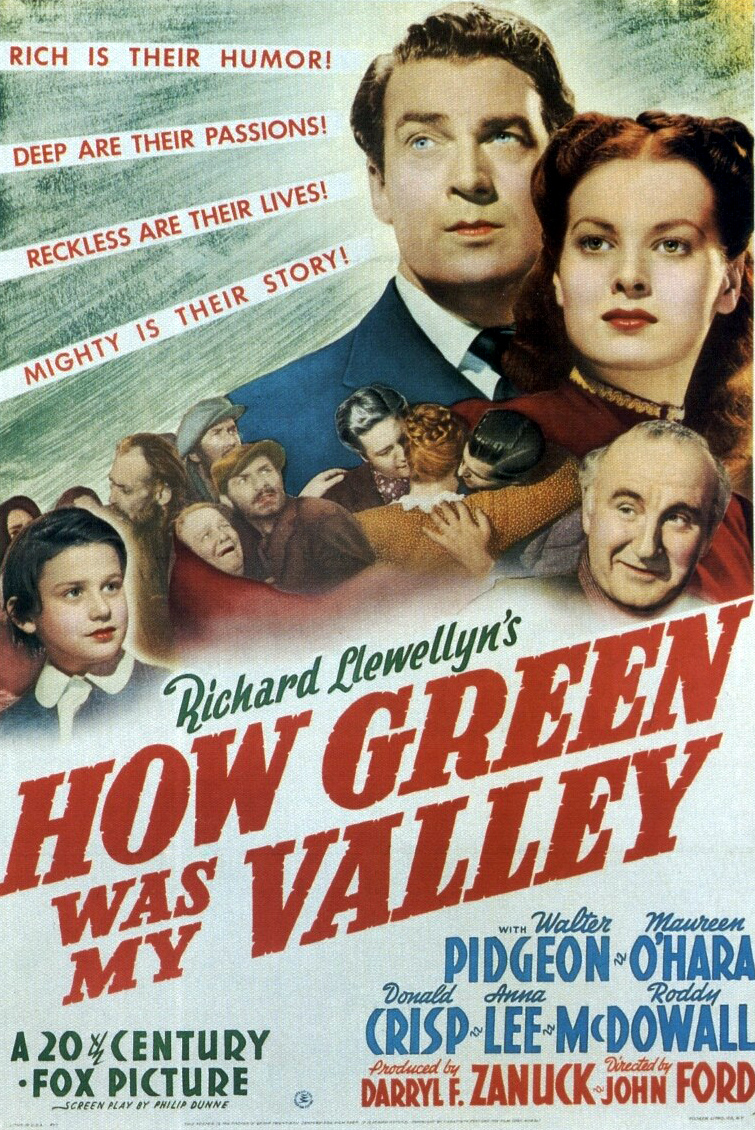
How Green was my Valley (1941)

This film is overlong,
 uneven, clunky and filled
 with groan-worthy and
 sigh inducing scenes.
 However it has some fantastic
moments and showcases
 the skill of it's director well.


This film is a mess in more ways than one. It has an uneven and often jarring tone, it is probably about 20 minutes too long and it perfectly fits the phrase 'product of it's time'. At one point in the film these flaws became so overbearing that I was tempted to stop watching all together. However I'm glad that I didn't, because I found some really admirable qualities as the film continued and it really began to grow on me.

The issue I feel I am obligated to discuss first is the setting, Wales. I am Welsh myself, and have lived here almost my entire life. Therefore my reading of this film will be radically different than a non-Welsh person. The first hurdle the film had to leap from the start was it's portrayal of the Welsh culture, my culture. So how did it fare? Visually it was very well done. John Ford seems to have a wonderful eye for scenery and nailed this aspect from the first moments of the film onward. I would not be surprised if the element which attracted Ford to the project was the opportunity to bring this setting to life, because it is the element he aces above all others. The film's most memorable moments come from it's fantastic cinematography and how it embodies it's setting so well.

Beyond this key aspect of the portrayal, the film largely feels quite phoned-in when it comes to how it handles Welsh culture. The accents are passable enough, although they sometimes dip into sounding closer to Irish than Welsh. What annoys me the most however is how the life of a mining community is shown. Mining has been one of the key industries in Wales for generations, and perhaps above anything else, it is a very difficult way of life. Miners are poor, have a short life expectancy due to the amount of toxic coal dust they ingest, and live under the assumption that they will probably die on the job at some point. This film does nothing with that lifestyle and sands off the consequences of it entirely. Poverty is not shown, in fact I would call the family of the main character closer to middle-class than working-class. This is a huge issue with the film in my opinion and robs the setting of not only it's realism, but also the potential drama the subject could bring along. The aforementioned idea of impending mortality comes up a little at the end, however by that time it was too late, at least in my opinion.

Aside from it's portrayal of the culture, the film boasts a good cast of strong actors. I cannot really think of any bad performances in the film, in fact despite some grievances with the accent the majority of the acting is very good here. The are a lot of subtle moments from the cast here, and most of the powerful character moments in this film are made so due to some great expressions and emotive body language. A young Roddy McDowall leads the cast here, and he is actual very good for such a young actor. Definitely one of the best child performances I have seen form a film of this era. Donald Crisp should also receive high praise for his portrayal of the father, showing a wide and deep range of emotions whilst undergoing some real development and changes throughout the narrative. Overall, this film has some great acting bolstered by a solid, if fairly dated, script.

 The pacing is one of the most bewildering elements of the entire film. On the one hand, the film feels quite drastically overlong and several sections probably could have been cut. In addtition the film has an awful disregard to internal continuity, forgetting prior scenes in moments wherin it would have been perfect to do so. However despite this, it is relaxed and slow moving enough to be enjoyable. It is a relaxing film to watch and is never too rash whenever it changes intensity or tone (I will get to that). Overall I guess it's pacing is too sloppy and the screenplay is too wishy-washy to really work properly, however I am not willing to call it a complete failure due to how pleasant it was to watch during it's slower sections.

Finally the film's tone. Once again, it is an uneven mess and is probably another instance of how the film is a product of it's time. Some fairly heavy ideas and moments are disregarded completely in a jarring display, for example the surprisingly ho-hum reaction to a prominent character dying by his entire family. A scene involving a character possibly being crippled for life is followed by a semi-comedy scene featuring a comically drunk doctor. This tonal dissonance is hard to explain or justify, however the best way I have is this; The film is told from the perspective of a man looking back at his childhood. I personally viewed these  moments as the character attempting to dull the pain of these moments to himself. Despite this however, the tone is still detracting and often feels like poor writing rather than a stylistic choice. 

Overall, this film is a total mess. In some aspects it is very good, the cinematography is great, the acting engaging and the atmosphere warm and nostalgic. However it's scattershot tone, muddled pace and cheesy falseness prevents it from being anything more than a fascinating curiosity.

By Jack D. Phillips
A Zoom Film Review

Monday, 9 February 2015

Ohayo [Short Film] (2008)

A final encore from perhaps the most tragically 
short-lived auteurs of the last 50 years. Goodbye Kon.

Yet another review of a film less than five minutes long. I'm actually enjoying reviewing film in this brief format because they allow more abstract thinking around the film itself rather than simply covering the same points in every single review (something I aim to outgrow when I become a less mediocre writer).

Moving past that, Satoshi Kon.

A master. 

I know consider Tokyo Godfathers one of my all-time favourite films, and I simply cannot wait to see Perfect Blue and especially Paprika. So I consider myself a fairly big fan of the director, if a neophyte when it comes to his work. Ohayo is effectively a final goodbye from the man before his untimely passing. 

The film can essentially be viewed as a tiny microcosm for his entire filmmaking identity, or at least as I know it. Surrealist, based around a simple yet curiously unexplored subject, focused upon femininity and above all else, beautiful. Despite being so short, there is something achingly sweet about it. I got a similar vibe from Black Breakfast, so perhaps there is something inherently smile inducing about getting an entire cinematic experience in the time it takes to eat a sandwich, yet being left with a vision that'll stick with you for the rest of the day.

Watch Ohayo on Youtube for free. Do it to honor the final work of a great man and to enjoy a wonderfully supple slice of animated beauty.

By Jack D. Phillips
A Zoom Film Review

Selma (2014)

http://static.rogerebert.com/uploads/movie/movie_poster/selma-2014/large_w2uuoiXk7HdICSSTMrQuj98tgAw.jpgA top quality biopic,with fantastic acting and great camerawork. Despite sounding simple, it is actually something rather special.


Selma recently caused much controversy due to it's lack of presence at the Academy Awards. There as been much back and forth as to what aspects were truly deserving of accolade and what the lack of Selma means for this years awards ceremony. So here is my opinion; Selma was horribly snubbed by the consistently short-sighted Academy and David Oyelowo definitely deserved a nomination for best actor.

Moving on from the discussions about how incompetent the Academy is, Selma is a fantastic film. I have no idea what happened in 2014, but American cinema shone brighter than it has in so many years. Selma joins the ranks of several other amazing films I have already covered this year and offers one of the best biopics in recent memory. David Oyelowo's portrayal of Dr. King is flawless. He delivers the speeches with the same transfixing weight and with pitch perfect inflections. There are points in the film where we hear speeches from King being delivered without any visual cues, and I could not actually tell whether it was archive footage or not. I don't want to know, because that fact stands as a testament to a fantastic performance. I now consider this to be the definitive portrayal of Martin Luther King and desperately hope that the lack of Oscar nomination doesn't prevent Oyelowo from having a great career in the future.

Aside from Oyelowo, pretty much every performance in the film is of an exceptionally high quality. There is not a single weak link amongst them. Tom Wilkinson deserves special praise for giving one of the years best supporting performances, his one-on-one exchanges with Oyelowo are some of the most gripping scenes I have seen all year. Oprah Winfrey delivers a surprisingly understated performance, in a role which works due to her ability to convey pain and emotion, rather than because she is Oprah Winfrey, There is little else to say other than I can not recollect a bad moment in this film from a sheer acting standpoint, and that everybody who worked on this film to deliver these performances should feel proud.

The film's cinematography is great. Ava Duvernay clearly has a very refined and complete grasp of cinematic language, which she perfectly exemplifies here. The period is lushly recreated, however the framing does not force this aspect down the audiences throat. The lighting is excellent, some of the best I have seen from a 2014 film, and it perfectly reflects the current mood of the narrative and the characters. Camerawork like this perfectly exemplifies why The Theory of Everything failed to leave a huge impact on me. The camera existed to merely show the performances, or at best slightly enhance them. Here, it combines with the acting to create magic. With a great performance you ave the making of a great play, or a top-notch soap opera. Mix in some beautifully framed and equally well-crafted visual storytelling, and that is when a film is born. 

Overall, Selma probably won't stick with in the same way as Birdman or Whiplash, because it has some distracting flaws. Occasionally grating soft-piano during some conversations work to cheapen the sincerity of the film, and dampen an otherwise strong soundtrack. Also, the portrayal of some of Alabama's white citizens was perhaps a little too cartoony. Despite this however.

Despite these minor distractions however, Selma stands as one of the best films of it's type. Biopics have grown as stale as any other existing genre of film, and sadly may only get worse in the coming years. However, Selma stands here to prove that a films based on a historical account can still be powerful and evocative in ti's own right. I love it, and hope you are able to see it too.

By Jack D. Phillips
A Zoom Film Review


Saturday, 7 February 2015

Black Breakfast (2008) [Short Film]

A four minute mood piece on the polluted nature of Chinese culture. Very effective for what it is.

This is perhaps the most obscure thing I will ever cover on this blog. A four minute piece of ambient storytelling from the equally obscure Stories on Human Rights anthology film. The reason there's no poster on this review is because I could not find one. The only reason I was made aware of this film, was because of the wonderful site Taste of Cinema, which I highly recommend checking out if you haven't already.

Beyond the odd nature of this film, it is actually quite good. An effective and poetic little piece about the overwhelming pollution of China. I do not know how literal the imagery is meant to be, due to my lack of knowledge on the subject, however I am more interested after seeing this film.

In conclusion, all I can say is that I am curious to find the other twenty-two pieces to this anthology and see how they work as a bigger picture.

By Jack D. Phillips
A Zoom Film Review
Documentary  Month 2015 #4

Friday, 6 February 2015

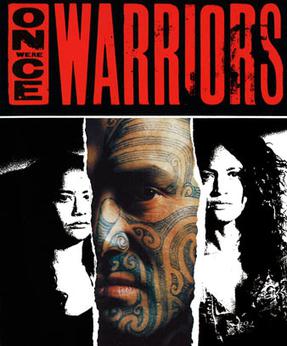
Once Were Warriors (1994)

http://upload.wikimedia.org/wikipedia/en/a/a8/Once_Were_Warriors_poster.jpgA messy and ultimately failed
attempt to portray a culture
through a low-key
family drama.


Once Were Warriors is an often acclaimed New Zealand drama, focused on the troubles of a family descended from Maori culture. Since I believe in being forthcoming in my reviews, I must admit that I was very disappointed by this film and I do not understand why this film is regarded as a classic of world cinema.  However, my opinion of this film was quite different at the halfway point, I actually mostly liked. It was the second half which plummeted in quality so drastically.

The most glaring flaw of the film is it's acting. There is this detracting sense that everybody on screen is trying to act rather than actually acting, and I was painfully aware the entire time that I was watching actors rather than characters. That is not to say that every performance was bad, Rena Owen for example played her part fairly well, she conveyed a lot of emotion and was generally competent. However pretty much every single other performance ranged from mixed and highly uneven in quality, to hysterically bad. I can forgive a lot in a film, however such low quality and painfully unimpressive acting is not one of them. The characters portrayed by the actors are also starved for development and become needlessly one-note by the films conclusion. Temuera Morrison is wasted on a character who loses all complexity towards the end, which is a shame because otherwise the performance was shaping up very well.

 The performances are not helped by the script, which honestly started promisingly. The characters were well etched out, the dilemmas established well, and there seemed to be an abundance of things for the film to explore. However as the film continued it lost all it's focus and continued on to juggle half-baked plot threads rather than fleshing them out. I feel that the film would have benefited from a longer running time, allowing these threads to reach some form of conclusion rather than limply stopping. There is a sub-plot involving one of the sons joining a gang...and that's it. No development is given, it adds towards nothing and is not even particularly thematic. A longer running time would have allowed something to be done with this element, however I would have more likely cut it entirely as the core ideas of the film don't relate to it in the slightest. It feels like copious amounts of effort was thrown into portraying modern Maori culture for what it is, however it all falls flat. Nothing is given context or explanation, and what the elements which are given context are entirely superfluous, such as a scene wherein a social care worker talks about a warrior's inner armor, and it adds to nothing. Honestly the entire film is filled with similar moments or ideas which go nowhere, and these pointless ideas detract from the main narrative and leave it woefully underdeveloped.
The screenplay's horrendous dialogue exacerbates all of it's issues. Every line reeks of melodrama, there is zero subtly or naturalism to anything and the entire thing feels like a first draft. The film in many ways feels like a tv miniseries due to the copious melodrama and lack of focus. If I was told that this was a tv show condensed into a film, then I would likely believe it.

The film covers some very heavy subjects such as rape, suicide, domestic violence and alcoholism. This is one area where the film succeeds however, due to the directors unflinching rawness mixed with a cautious understanding. The misogynistic overtones of Maori culture are shown without restriction, and I must give the film credit for that. I must also credit the film for some nice camera work, particularly the great first shot. 

In conclusion, I was greatly disappointing by this film. The film's early issues overwhelmed it by the end and it never came together into anything meaningful. Watch it for yourself if you want, or comment if you are one of the many fans of this film, because I want to understand why it is so beloved.

By Jack D. Phillips
A Zoom Film Review

Wednesday, 4 February 2015

Jesus Camp (2006)

One of the scariest
and most 
thought provoking
documentaries I will
 see this month.


Jesus Camp is a time capsule for one of the scariest points in recent world history. A time when mass Christian hysteria threatened to overthrow decades of social advancement and America (sadly the only country which seems to matter when it comes to incidents such as this) dangled above an anti-intellectual, and monumentally short-sighted  Republican abyss. Over the last 9 years, the radical Evangelical groups seen in this film have slowly lost momentum and they have failed to restrain society's progress, however these facts do not dampen the power of this film. It is shot elegantly, paced perfectly and subtly delivers it's message without forcing it's viewpoint on the viewer, the madness speaks for itself. 

Jesus Camp follows the indoctrination of several children at the hands of a children's pastor named Becky Fischer. We witness the delusional mindset of these people and the poisonous effect they have on the minds of the young, the lies they are fed and the militant mindset they are forced to adopt. The frequent references made to war and the apparent idea that the children are being turned into children exposes the aggression of this environment, and the film does an excellent job by coherently showing us the obsessive and xenophobic teachings of Fischer. This film is exactly what it claims to be, an unabashedly brutal and raw look into the breeding tube for America's most dangerous future citizens.

The film is fairly brief and keeps a brisk pace, preferring to show an expansive range of topics rather than focusing on one element of Evangelism exclusively. We see both the inner workings of this church and the personal effect the environment has upon the children themselves, for example the media which is withheld from them and the pastimes which are frowned upon. By showing both the small psychological impacts, and the far larger in scale machinations of Fischer's group, we are given a complete picture of the situation and little is left unscrutinised. In terms of insight, this film is unbelievably effective and is perhaps the all time definitive documentation of this heavy issue.

In conclusion, this film is every bit as frustrating and anger inducing as it has been built up to be. It will leave you furious after your initial viewing, however this anger will slowly settle into deep contemplation. This film is bound to bring up discussion amongst it's viewers and encourages a critical outlook on religion and society, things which the people captured by the film certainly do not want you to have.

By Jack D. Phillips
A Zoom Film Review
Documentary Month 2015 #3

Sunday, 1 February 2015

Whiplash (2014)

Whiplash - Poster Another titanic success 
from 2014.
masterpiece
 from a stunning
new directorial talent.


As the weeks go on I am becoming more convinced that 2014 is one of the greatest years in recent cinema history. Whiplash is possibly the best music themed film I have ever seen, and that means everything it implies. An astonishing soundtrack, fantastic drama, amazing performances and one of the most mesmerising climaxes I have ever seen.

The most talked about aspect of the film is the performance by J.K Simmons. He has received an Oscar nomination and it has been speculated that this film will send his career in a more dramatic direction from now on. Although I am somewhat irritated that this aspect of the film has overshadowed everything else wonderful about the film in the eyes of many, it is hard to dispute how brilliant Simmons is here. His character Fletcher is one of the most hypnotically terrifying things you will see in a recent picture. The character walks a fantastic tightrope between shockingly realistic, and skin-crawlingly repulsive. I have no hesitation in saying that this character should stand as one of the all time great movie psychopaths.

Another performance in this film, which has sadly been ignored for the most part, which I feel deserves even higher praise than Simmons is Miles Teller as Andrew. As cliche' as it is to say, he truly is a revelation. Bar none, he is the greatest acting newcomer of the year and he succeeds in an extremely challenging lead role. Teller's emotional conveyance, depth and highly expressive eyes genuinely impressed me and he provided another of the years best performances.

Whiplash's cinematography is also very impressive. The film is another great example of a cinematographer taking full advantage of the natural beauty of New York, and Whiplash truly deserves to stand up with some of the all time great 'New York movies', such as Taxi Driver and Mean Streets (Scorsese is kinda the go-to guy for stunning shots of New York). Whiplash combines it's impressive visuals with it's astonishing Jazz soundtrack to create an aesthetically enchanting thriller. The soundtrack in particular is perhaps the best of the entire year and I have been listening to it regularly. Knowing that Teller himself performed some of these incredibly complex tracks makes me appreciate his performance even more and adds to the realism of the character and by extension film.

The screenplay and dialogue of this film is flawless. The characters are quickly and clearly sketched out within mere moments of meeting them, and further depth and layers are added throughout the running time. Every exchange has a purpose and means something in the grand scheme of the film overall, however nothing feels expository or forced. The dialogue is gripping, elevated further by the universally fantastic acting, and shows Writer/Director Damien Chazelle's passion for the subject matter.

Overall, this film is a cornucopia of the best and freshest talents of the entire year. Chazelle, Teller and Simmons should stand as three of the greatest breakthroughs of the entire year. This film is a masterpiece and stands as one of the greatest films, not only of last year, but of the last several years.

By Jack D. Phillips
A Zoom Film Review 

Saturday, 31 January 2015

The House is Black (1963) [Short Film]

http://www.firouzanfilms.com/images/TheFirouzanFifty/TheHouseIsBlack/TheHouseIsBlack_DVD.jpgA poetic and stunningly
effective documentary.


To follow my first 'Documentary Month' review, here is another lauded and highly influential film from Iran, however with a radically different style and purpose.


This film is a beautifully shot and stunningly empathetic work from a director who was not even a filmmaker by trade. Forugh Farrokhzad, mostly know for her highly influential poetry, hand crafted this stunning insight into a leper colony.

The film features some of the most ingenious editing and cinematography I have seen in a documentary like this. There are some stunning and heartbreaking shots of the inhabitants of the colony, showing the suffering and pain of these people with a bold rawness, uncommon for the time of the film's release.There are several moments where the film drifts from documenting the subject in question, and instead begins to poetically muse the nature of humanity through the visuals. This film is undoubtedly the product of a highly unique and distinct artistic voice, who tragically died far too young to continue this raw expression.

The documentary weaves its way through a number of themes within it's brief runtime. Spirituality, hope, beauty and various other ideas, whilst also describing and showcasing the intense struggles felt by the inhabitants of this odd community. The high-reaching thematic elements and the educational information blend together fantastically.The film crafts these themes through a combination of lovely narration, from the director herself,  and the film's aforementioned excellent editing. By intercuting shots of elderly sufferers of the disease to children, the audience is given a sense of the wide and indiscriminate nature of the disease. Touches like this are what makes this film a masterpiece of poetic realism in my eyes. So much is conveyed with so very little.


In conclusion, the film is a little miracle. This film can be credited with planting the roots which would later bloom into the Iranian new wave, and is often though as the earliest true masterpiece of Iranian cinema. I am most reminded of the classic 1930's film Freaks when I think of this film. A strange, poetic and thoroughly engrossing voyage into a relatable yet alien world, I would recommend both films highly. The House is Black is available on YouTube for free, in good quality (however the subs are a little tough to read at times) and I would highly recommend it.


By Jack D. Phillips

A Zoom Film Review
Documentary Month 2015 #2

Wednesday, 28 January 2015

Thank You.

Thank you all for 1,000 views on this blog.

I only hope that I am worthy of such attention and continue to be so.

Cheers.